
How to Accept Credit Card Payments on a Kiddie Ride: The Operator’s Guide
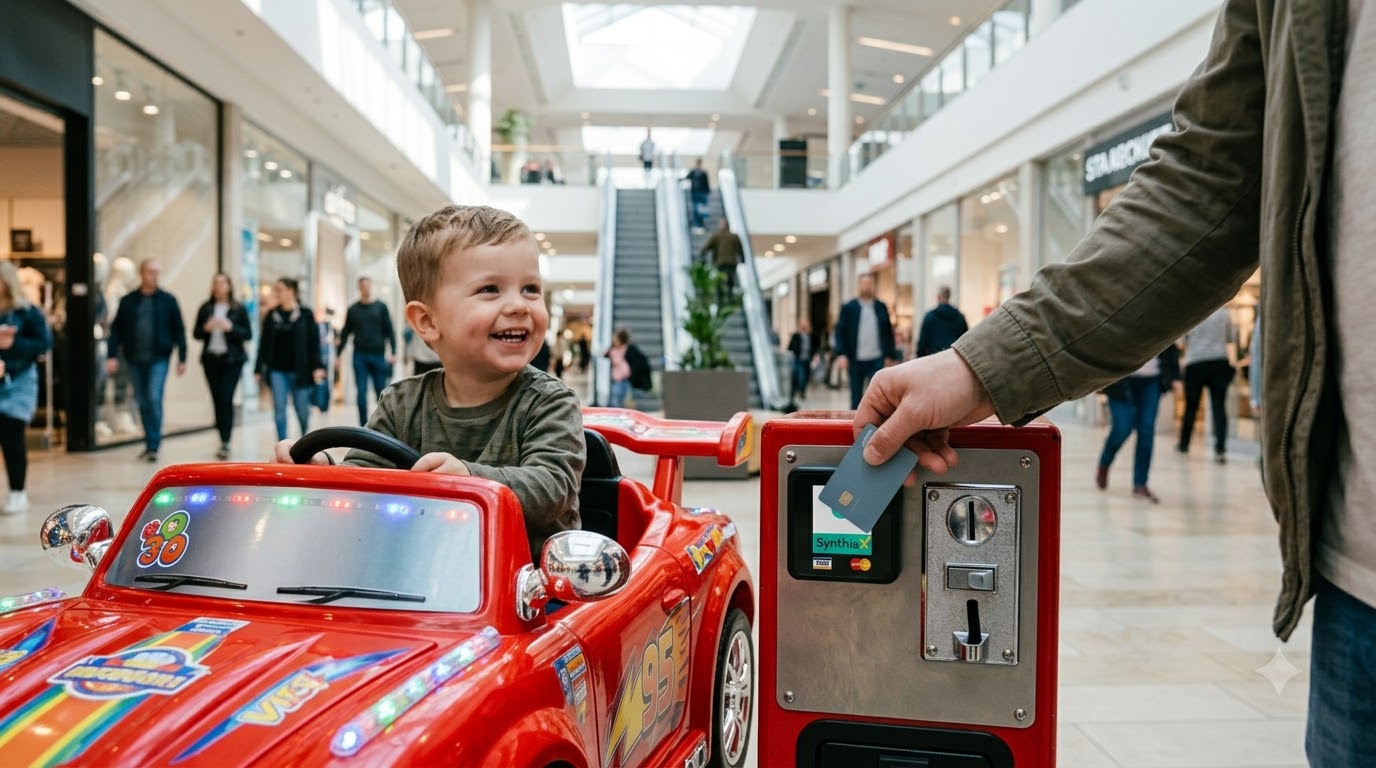
Are you losing revenue because parents no longer carry pocket change? To accept credit card payments on a kiddie ride, you simply need to connect a compact, pulse-compatible cashless card reader to your ride’s existing coin mechanism wiring, configure your price per pulse, and activate cellular telemetry. This quick upgrade allows your machine to accept contactless cards, chip cards, and mobile wallets like Apple Pay and Google Pay instantly.
Traditional coin-operated rides used to be the gold standard of unattended family entertainment. Today, consumer habits have changed drastically. Parents rarely carry physical coins or small bills, which means coin-only machines miss out on significant daily profits. Adopting cashless technology is no longer optional if you want to protect your bottom line. In this complete guide, you will learn how cashless hardware operates, why modernizing your fleet is essential, and how top solutions compare so you can easily accept credit card payments on a kiddie ride.
How Does a Credit Card Reader Work on a Kiddie Ride?
To successfully introduce credit card payments on a kiddie ride, you must understand how these machines register credits. Unlike modern smart vending machines that communicate via advanced MDB (Multi-Drop Bus) protocols, most amusement rides and coin-operated children’s rides use a pulse-based system.
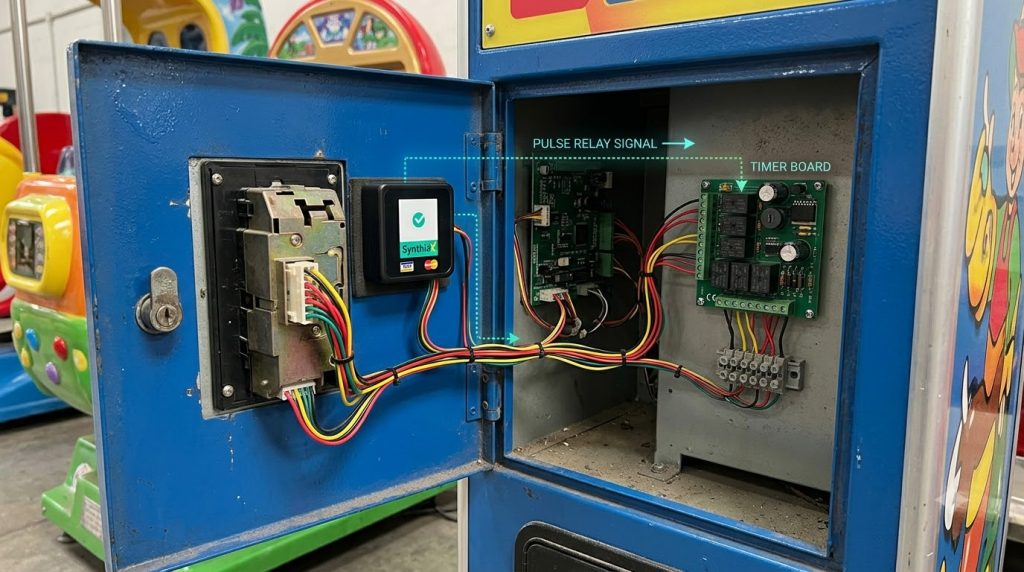
When a parent drops a coin into a traditional machine, the mechanical or electronic coin acceptor sends a brief electrical signal, known as a pulse, to the main timer board. That single electrical pulse tells the motor and music unit to run for a designated duration, such as sixty or ninety seconds.
Modern cashless card readers replicate this exact mechanism. Here is the step-by-step process of how hardware enables credit card payments on a kiddie ride:
1. Payment Presentation and Authorization
The customer selects or views the price on the reader display and taps their contactless card, smartphone, or wearable device. The card reader captures the payment credentials securely, encrypts the data, and transmits it via a built-in 4G/LTE cellular modem to the payment gateway. The banking network authorizes the transaction within one to two seconds.
2. Signal Translation into Pulse Commands
Once the gateway confirms the payment, the reader’s internal controller translates that monetary approval into an electronic relay trigger. If your ride costs two dollars and each coin pulse equals one dollar, the payment device sends two rapid pulses down the harness. This design ensures that adding credit card payments on a kiddie ride does not require replacing your existing motor, soundtrack boards, or coin mechanisms.
3. Activating the Ride Cycle
The ride controller receives the electrical pulses just as if a customer had inserted physical coins. It triggers the motion cycle, plays the accompanying audio, and illuminates the flashing lights. Simultaneously, the telemetry unit uploads the transaction details to your cloud management dashboard.
By mirroring the mechanical coin switch, a cashless reader lets you seamlessly accept credit card payments on a kiddie ride alongside existing coin slots, giving your customers maximum payment flexibility.
Why Do You Need a Credit Card Reader on Your Kiddie Ride?
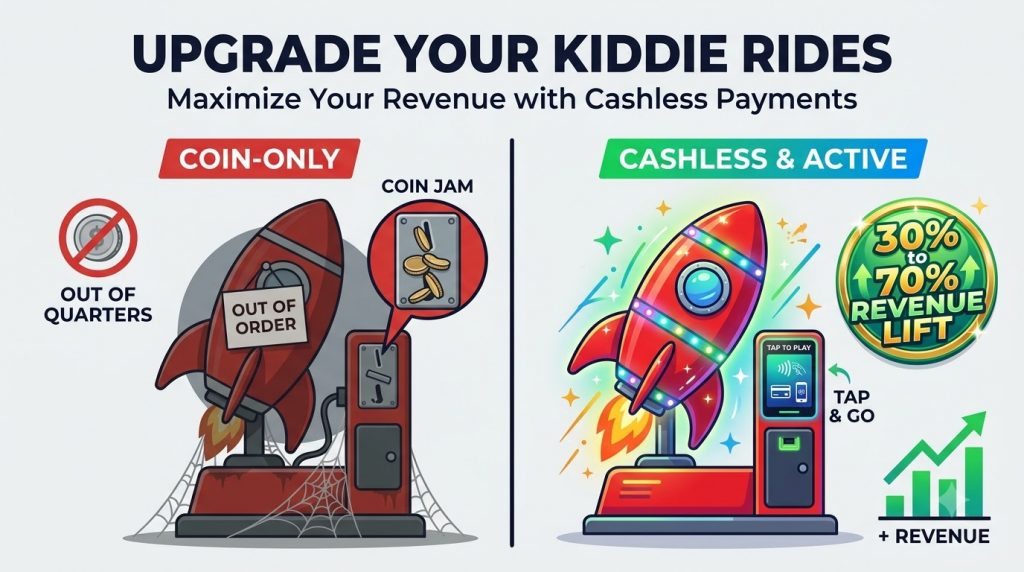
Upgrading your machines to support credit card payments on a kiddie ride delivers immediate financial and operational rewards. If you still rely exclusively on quarters or tokens, you are creating unnecessary friction for your primary customers: young parents. Here is why every operator must adopt credit card payments on a kiddie ride today.
TRADITIONAL COIN RIDE                      CASHLESS UPGRADED RIDE
 ┌────────────────────────────────┐         ┌────────────────────────────────┐
 │ • Misses cashless parents      │         │ • Captures impulse tap-to-pay  │
 │ • Vulnerable to coin jams      │  VS     │ • Zero mechanical downtime     │
 │ • Requires frequent cash runs  │         │ • Real-time cloud sales data   │
 │ • Fixed, static coin pricing   │         │ • Flexible pricing & bundles   │
 └────────────────────────────────┘         └────────────────────────────────┘
1. Match Modern Consumer Payment Habits
The overwhelming majority of modern shoppers do not carry spare change. When a toddler spots a colorful spaceship, car, or carousel, the purchase decision is spontaneous. If the parent searches their pockets and finds no coins, that sale vanishes forever. By enabling credit card payments on a kiddie ride, you capture impulse sales immediately through frictionless tap-to-pay technology.
2. Substantially Increase Revenue and Repeat Rides
Operators who implement credit card payments on a kiddie ride regularly report revenue increases between 30% and 70%. Contactless payments remove psychological spending barriers. When children inevitably ask for another turn, parents can simply tap their phone or card again without searching for an ATM or a bill changer.
3. Eliminate Mechanical Coin Jams and Vandalism
Mechanical coin acceptors are prone to jams, foreign object insertions, and vandalism. When a coin acceptor jams on a busy Saturday afternoon, your machine stops earning money until a technician visits the location. Installing hardware for credit card payments on a kiddie ride keeps your equipment operational even when a coin slot suffers physical damage. Furthermore, reducing physical cash inside the machine decreases burglary attempts.
4. Optimize Pricing Without Mechanical Re-tooling
If inflation or rising mall rent requires you to adjust your pricing from $1.00 to $1.50, re-tooling older mechanical coin slots can be a logistical headache. When you deploy credit card payments on a kiddie ride, you can change your prices remotely in seconds through an online management portal. You can even run off-peak promotions or bundle multiple rides together.
5. Access Live Telemetry and Fleet Management
A card reader is more than a transaction terminal; it is an intelligent communication hub. Supporting credit card payments on a kiddie ride gives you real-time visibility into machine uptime, daily revenue, and maintenance alerts. You no longer have to visit sites blindly just to check your earnings.
How to Install Hardware for Credit Card Payments on a Kiddie Ride
Adding cashless technology to your amusement equipment is straightforward. Follow these core steps to start accepting credit card payments on a kiddie ride:
- Inspect Your Machine Wiring: Open the service panel and locate the coin validator harness. Most kiddie rides use standard power lines (12V DC or 24V DC) and a simple two-wire pulse trigger (ground and signal line).
- Mount the Card Reader: Choose a flat, visible surface near the coin entrance. Use the provided template to drill mounting holes or install a secure external bracket. Ensure the device sits at an accessible height for parents.
- Connect the Pulse Harness: Connect the reader’s relay outputs to the coin line on the ride controller board. When set up in parallel, you can process credit card payments on a kiddie ride while still preserving coin functionality.
- Configure Pulse Timing and Value: Access the reader setup interface to define pulse length (typically 100ms) and pulse count per monetary unit.
- Test the System: Power on the equipment, initiate a test swipe or tap, and confirm that the ride triggers immediately.
Comparison: SynthiaX vs. Nayax vs. Cantaloupe
Selecting the right hardware platform is the most critical decision when preparing to accept credit card payments on a kiddie ride. While several companies offer unattended payment devices, their features, pricing, and amusement compatibility differ significantly.
| Feature / Metric | Nayax (VPOS Touch) | SynthiaX (SynthiaX-1) | Cantaloupe (Engage) |
| Hardware Cost | £300 – £350 | £120 – £140 | £300 – £360 |
| Monthly SaaS Fee | £8 – £12+/mo per device | Flat £7 no hidden charges | £8 – £10+/mo per device |
| Transaction Fees | 2.5% to 5.95% per sale | Flat 1.5% + No fees for first 3 months | 5.95% per transaction + separate monthly service fee per device |
| Connectivity | 4G Multi-Carrier | 4G Multi-Carrier | 4G LTE |
| Transaction Speed | 2 to 4 seconds | <2 seconds | 2 to 5 seconds |
| Telemetry & DEX | Yes | Yes | Yes |
| Payout Frequency | Monthly or Bi-weekly | Custom settlements (Daily, weekly, monthly or as per need) | Weekly to Monthly |
| Remote Vend Tool | Basic | Advanced Mobile App | Standard |
| Onboarding fees | Ranges from £40 – £95 | No onboarding fees | 0 upfront, charges £30 transfer fees per device |
| Customer Support | Ticket-based | Fast, direct, operator-first support | Regional business hours |
| Contract Terms | Standard | Flexible / No Lock-in | Often Multi-Year |
Nayax (VPOS Touch)
Nayax is an established brand in the unattended cashless payment sector. The Nayax VPOS Touch provides a vibrant color touchscreen and accepts chip, swipe, and contactless cards. It supports pulse protocols, making it possible to facilitate credit card payments on a kiddie ride.
However, many amusement operators find Nayax devices complex to configure for non-standard pulse equipment. The back-end software can feel overwhelming for small fleet owners, and recurring software fees combined with transaction surcharges can eat into the margins of smaller amusement routes.
Cantaloupe (ePort Engage)
Cantaloupe produces popular cashless terminals engineered primarily for food, snack, and beverage vending machines. The ePort Engage series boasts clean aesthetics, touchscreen navigation, and fast payment processing.
While Cantaloupe handles traditional automated retail with ease, it is less tailored for pulse-driven amusement rides. Adapting an ePort to handle credit card payments on a kiddie ride often requires auxiliary conversion harnesses and specialized wiring adapters. In addition, their telemetry platform focuses heavily on beverage inventory rather than ride cycles.
SynthiaX: The Dedicated Solution
If you want the most seamless, profitable method to introduce credit card payments on a kiddie ride, SynthiaX stands out as the ultimate solution.
SynthiaX engineered its hardware specifically to address the pain points of amusement and coin-op equipment. Unlike general-purpose terminals, SynthiaX devices feature responsive pulse-relay logic that prevents missed credits, ensuring young riders get their ride instantly without failed cycles.
Furthermore, SynthiaX provides clear, competitive transaction rates with minimal monthly overhead, preserving your revenue on dollar-range transactions. Its weather-resistant exterior easily withstands busy shopping center corridors, outdoor funfairs, and high-traffic family entertainment centers. With intuitive cloud telemetry and plug-and-play wiring harnesses, SynthiaX makes enabling credit card payments on a kiddie ride straightforward, fast, and remarkably profitable.
Frequently Asked Questions
Can I still take coins after installing a cashless payment reader?
Yes. When you install a terminal to accept credit card payments on a kiddie ride, you connect the device in parallel with your existing mechanical coin validator. The machine will continue to register coin pulses as normal while giving parents the added freedom to tap their bank cards or smartphones.
How much does it cost to accept credit card payments on a kiddie ride?
Outfitting your machine involves two main investments: the upfront cost of the card reader hardware and ongoing transaction processing fees. Quality hardware generally ranges between $180 and $350 per machine, while processing fees usually average between 2.5% and 5% per swipe or tap. Given that cashless upgrades routinely lift ride volume by over 30%, the hardware quickly pays for itself.
How do card readers connect to the internet inside malls or arcades?
Cashless payment readers use integrated roaming 4G/LTE cellular SIM cards. They do not require a local Wi-Fi connection or ethernet cables to process credit card payments on a kiddie ride. The system automatically connects to the strongest available cellular tower to authorize transactions within seconds.
Are card readers safe from weather and vandalism on outdoor rides?
Top-tier payment terminals designed for amusement machines feature tough, IP-rated enclosures. These devices resist water ingress, dust, direct sunlight, and physical tampering. For outdoor equipment, choosing a rugged reader guarantees dependable credit card payments on a kiddie ride regardless of the weather.
Can I set variable pricing or multi-ride packages?
Yes. Modern card reader management platforms let you configure multi-pulse pricing. For instance, you can set the reader to charge $1.50 for a single ride or offer a discounted multi-tap package, such as three rides for $3.50. This flexibility encourages parents to purchase multiple rides in a single visit.
Upgrade Your Fleet Today
Relying solely on coin drops severely limits your revenue potential in an increasingly cashless world. Parents want speed, safety, and convenience, and equipping your machines with tap-and-go technology ensures you never miss another sale.
If you are ready to modernize your operations, reduce service calls, and maximize your weekly earnings, SynthiaX delivers the complete hardware, telemetry, and payment platform you need. Upgrade your route with SynthiaX today and discover just how simple it is to accept credit card payments on a kiddie ride!