

How to Go Cashless on Arcade Machines: The Complete Operator Guide
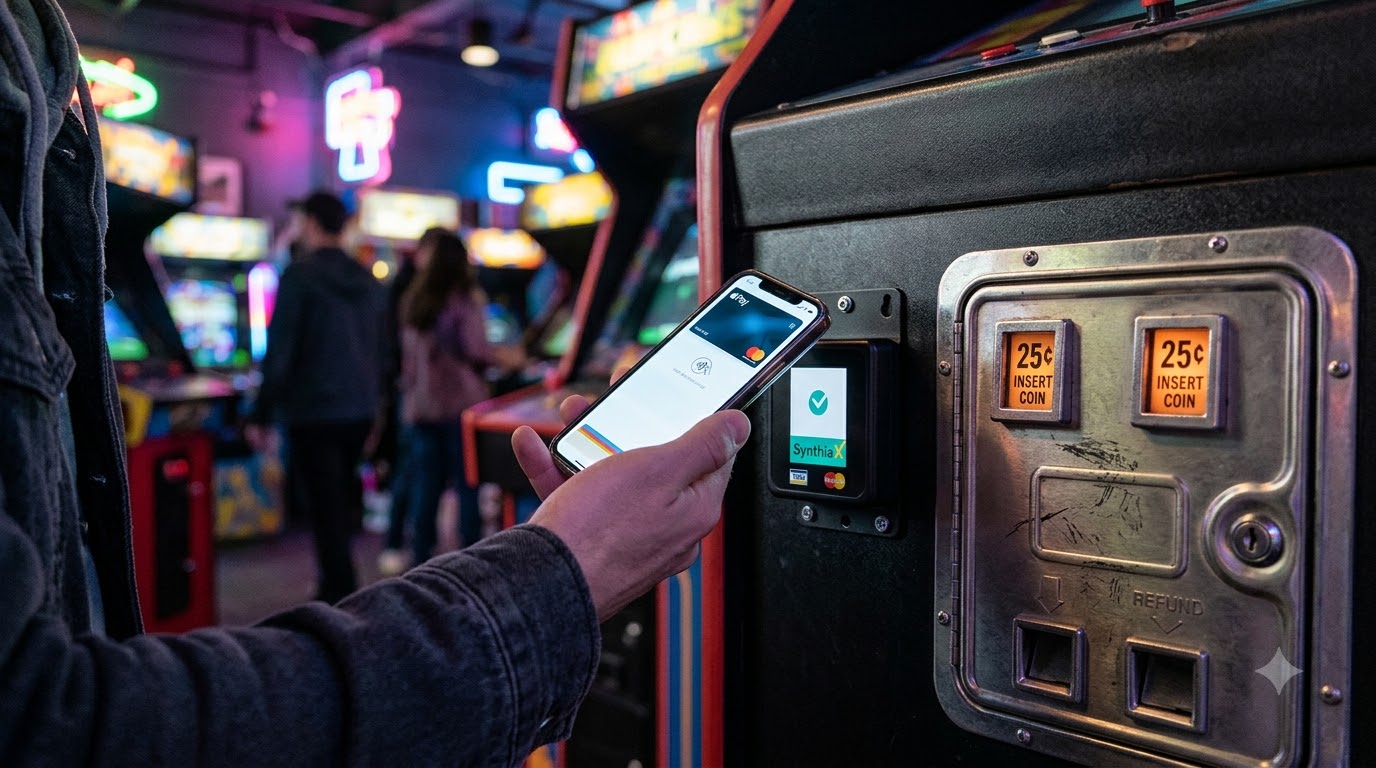
The amusement industry is undergoing a massive digital transformation. If you still rely exclusively on quarters, tokens, or paper bills, you leave substantial revenue behind every single day. Modern players carry smartphones, smartwatches, and contactless debit cards, but rarely pockets full of loose change. Learning how to go cashless on arcade machines is the single most effective operational upgrade you can make to increase your route revenue, protect profits, and future-proof your entertainment venue.
To go cashless on arcade machines, you simply wire a compact contactless card reader into your cabinet’s existing coin switch or pulse interface, connect the reader to a cellular telemetry gateway, and configure the credit-to-pulse ratio inside your cloud management dashboard. Once installed, your arcade cabinet accepts digital wallets, tap-to-pay credit cards, and contactless payments while instantly crediting plays directly to the machine.
Below is your complete step-by-step blueprint on how to go cashless on arcade machines, what hardware you need, and why solutions like SynthiaX lead the market in upgrading modern amusement operations.
How to Go Cashless on Arcade Machines
Transitioning your route or family entertainment center to modern payments does not require replacing your beloved cabinets. Whether you run vintage pinball machines, claw cranes, or modern multiplayer video games, you can modernize any cabinet through a straightforward retrofit. Follow these five practical steps to go cashless on arcade machines.
[Arcade Cabinet] ---> [Pulse/Coin Harness] ---> [SynthiaX Cashless Reader] ---> [Cellular Network] ---> [Cloud Dashboard]Step 1: Audit Your Arcade Cabinets and Signal Inputs
Before buying hardware, inspect the coin doors and control boards of your equipment. Most arcade units trigger games via a mechanical coin switch, an electronic coin comparator, or a parallel pulse line. Identify the operating voltage inside the cabinet (typically 12V DC or 24V DC) and confirm whether the coin mechanism uses standard pulse signals or a serial interface. Understanding your machine logic ensures you select compatible harnesses to go cashless on arcade machines without splicing wires blindly.
Step 2: Select the Right Payment Hardware Architecture
Select an all-in-one payment reader engineered specifically for amusement equipment. Traditional retail terminals will not work because arcade cabinets rely on pulse duration to register gameplay credits. You need a device capable of translating card authorizations into millisecond-accurate electrical pulses. Solutions like SynthiaX excel here because they pack both telemetry and pulse output into a compact footprint that fits standard dollar-bill-acceptor (DBA) door cutouts.
Step 3: Wire the Reader into the Coin Door and Power Supply
Mount the card reader securely to the front door of your cabinet or in place of an existing bill validator if you want the machine to be just cashless. Connect the reader power leads to the cabinet power supply unit or a dedicated 12V transformer. Next, connect the pulse output wires from your cashless terminal parallel to the microswitch on your coin acceptor. This parallel wiring ensures the cabinet retains the ability to accept physical tokens or quarters alongside digital payments if you prefer a hybrid configuration.
Step 4: Configure Pulse Timing and Pricing in the Dashboard
Once the hardware is seated, log in to your provider cloud management portal. Here you define pricing tiers, promotional discounts, and pulse timing. For example, if a single game costs $1.50 and your machine requires three pulses to start, set the terminal to emit three 50-millisecond pulses upon an approved $1.50 transaction. Fine-tuning these parameters is critical whenever you go cashless on arcade machines so players receive immediate credit without game logic errors.
Step 5: Test Connectivity and Complete Sample Swipes
Power on the arcade cabinet and allow the cashless reader to establish an encrypted cellular link. Run test authorizations using Apple Pay, Google Wallet, and a physical chip card. Verify that the pulses fire instantly, the machine displays gameplay credits, and the transaction logs cleanly in your mobile management console. After validating the audit trail, your unit is ready for public play.
What All Is Needed to Go Cashless on Arcade Machines
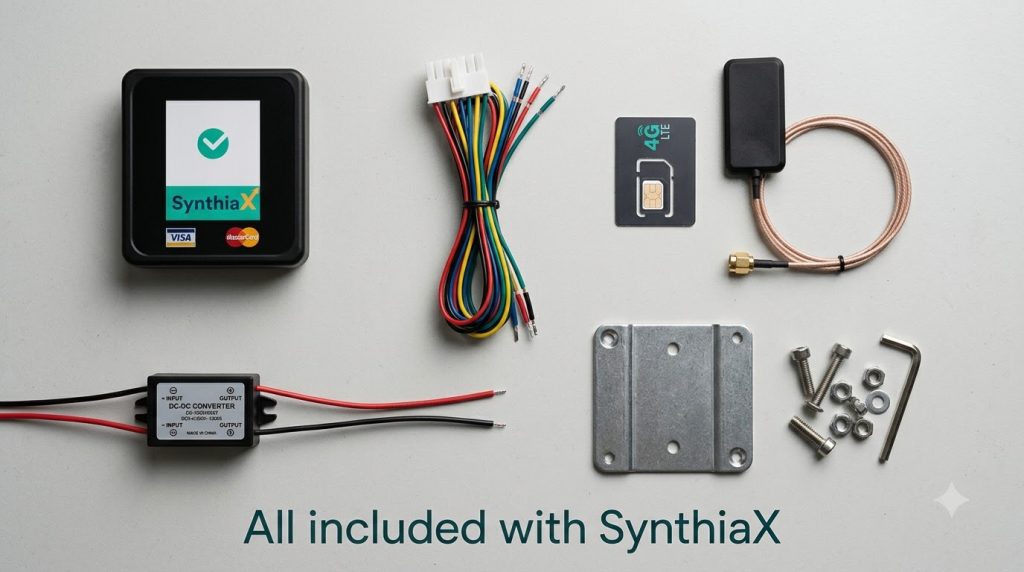
Executing a seamless transition requires a specific combination of physical hardware, secure connectivity, and management tools. Here is the full equipment checklist required to go cashless on arcade machines:
+-----------------------------------+---------------------------------------------------------+
| Required Component                | Function                                                |
+-----------------------------------+---------------------------------------------------------+
| 1. Compact Contactless Reader     | Accepts NFC, EMV chip, mobile wallets, and magnetic cards|
| 2. Amusement Pulse Harness        | Directs credit signals to the game control board        |
| 3. Cellular Telemetry Gateway     | Delivers encrypted connectivity without local Wi-Fi     |
| 4. Cloud Telemetry Dashboard      | Tracks real-time audits, payouts, and machine health    |
| 5. Step-Down Power Converter      | Converts cabinet power to clean 12V/24V DC              |
+-----------------------------------+---------------------------------------------------------+
1. Compact Contactless Card Readers
Your front-facing reader must survive heavy foot traffic, drink spills, and excited players. Choose an IP-rated, ruggedized terminal featuring a clear display screen that prompts users to tap, insert, or swipe. The reader must support EMV chip cards, NFC contactless payments, and major digital wallets.
2. Custom Amusement Pulse Harnesses
Arcade motherboards communicate through rapid contact closures. A quality pulse harness bridges the gap between the card reader output relay and the game credit input pins. High-grade harnesses include diode protection to prevent reverse-voltage spikes from damaging sensitive game boards.
3. Cellular Telemetry and Multi-Network SIM Cards
Never rely on venue Wi-Fi networks that suffer from interference, password changes, or guest bandwidth throttling. A professional unattended terminal features integrated 4G LTE/5G cellular connectivity. Multi-carrier SIM cards automatically jump to the strongest available cell tower, guaranteeing uninterrupted transaction processing.
4. Cloud Management and Processing Portal
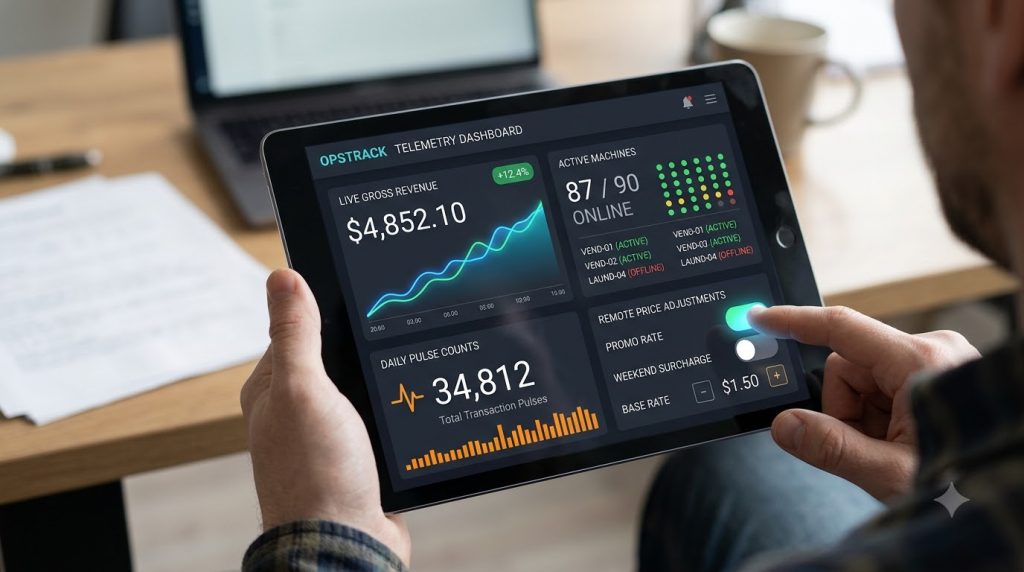
A robust merchant management portal serves as your administrative nerve center. It allows you to monitor revenue by individual machine, adjust game pricing remotely, view daily batch settlements, and receive automated alerts if a machine loses connectivity.
5. Regulated Power Supplies and Mounting Brackets
Arcade cabinets often contain noisy power environments. Installing an inline power regulator protects your digital card reader from voltage sags caused by CRT monitors or high-draw force-feedback motors. Additionally, pick standard industry mounting brackets to secure your terminal neatly over existing coin doors or blank validator plates.
Advantages of Going Cashless on Arcade Machines
Upgrading from mechanical coin mechanisms to digital payment terminals unlocks major financial and logistical benefits. Operators who go cashless on arcade machines consistently report rapid returns on investment across every venue style.
+---------------------------------------------------------------------------------------------+
|                          TOP BENEFITS OF GOING CASHLESS                                     |
+---------------------------------------------------------------------------------------------+
|  [+] 25% - 40% Increase in Revenue (Impulse buys and multi-credit bundles)                  |
|  [+] Total Elimination of Coin Jams, Theft, and Coin-Skimming Losses                        |
|  [+] Dynamic Remote Pricing (Adjust price per play during peak hours)                       |
|  [+] Real-Time Accounting (Instant digital audits without manual counting)                  |
+---------------------------------------------------------------------------------------------+
1. Massive Uplift in Average Spend
Cash limits players to whatever spare change sits in their pockets. When you go cashless on arcade machines, you eliminate this psychological spending barrier. Players gladly tap their card multiple times to continue a boss fight, replay an air hockey match, or win a plush toy from a claw crane. Operators routinely experience a 25% to 40% increase in gross collections immediately after installing contactless readers.
2. Elimination of Route Labor and Coin Theft
Manual coin collections drain time, require vehicle fuel, and create opportunities for theft or physical accounting errors. Mechanical coin selectors also suffer from frequent jams caused by bent coins, foreign objects, or sticky residue. Digital systems permanently solve these headaches. By removing manual handling, operators cut maintenance calls and recover hundreds of hours every year.
3. Flexible Pricing and Credit Bundling
Mechanical coin slots restrict your pricing to fixed increments like $0.25 or $1.00. Digital payment readers liberate your pricing model. You can charge $1.25, $1.75, or $2.50 per play. Better yet, you can configure volume discounts directly on the reader display, encouraging players to spend $5.00 for four plays instead of walking away after a single round.
4. Real-Time Telemetry and Route Visibility
When you go cashless on arcade machines, you gain complete remote visibility into machine performance. From your smartphone, you can see which games earn the most money, track slow-moving titles that need repositioning, and verify gross earnings before traveling to the location.
Hardware Comparison: SynthiaX vs. Nayax vs. Cantaloupe
Selecting the ideal payment platform dictates your ongoing subscription fees, connection reliability, and installation complexity. Below is an honest breakdown of the top three hardware choices for operators looking to modernize their arcade equipment.
| Feature / Metric | SynthiaX | Nayax | Cantaloupe |
| Primary Terminal Model | SynthiaX-1 Reader | VPOS Touch / Onyx | ePort Engage / G10-S |
| Hardware Acquisition Cost | Most Affordable | Moderate to High | High |
| Transaction Processing Fee | Lowest in the Market (1.6% with 0.6% for first 3 months ) | Standard Tiered Rate | Standard Tiered Rate |
| Monthly Telemetry / SaaS | Transparent Flat Rate £7/month | Higher Tiered Monthly Fee | Higher Monthly Contract Fee |
| Support Accessibility | 24/7 Rapid Live Support | Ticket System with Queue | Phone Support during Hours |
| Inventory & Telemetry Engine | Ardelino Telemetry System | Nayax Core / MoMa App | Seed Management Platform |
| Installation Simplicity | Plug-and-Play, Pulse and MDB (under 10 min) | Moderate Configuration | Moderate to Complex |
SynthiaX: The Dedicated Amusement Champion
SynthiaX stands out as the ultimate modern solution for arcade and amusement operators. While competing brands built their legacy inside standard vending machines, SynthiaX engineered its hardware directly for fast-paced amusement environments. The unit features native pulse calibration, ultra-low transaction latency, and an ultra-compact chassis that installs effortlessly on cramped coin doors.
SynthiaX eliminates the bloated monthly fees common among traditional vending processors. Its clean web interface provides amusement-specific reporting, allowing you to monitor game cycles, pulse counts, and peak play hours. For operators who want to go cashless on arcade machines without fighting complicated wiring harnesses or legacy vending protocols, SynthiaX serves as the gold standard.
Nayax: The Unattended Retail Veteran
Nayax, particularly with its VPOS Touch and Onyx units, has long maintained a broad international footprint across unattended retail. Nayax devices support multiple currencies and international payment methods. However, because Nayax focuses primarily on multi-drop bus (MDB) vending machines, installing them on amusement cabinets often requires extra I/O cables, external power converters, and complex configuration steps to register pulses accurately. Nayax also carries rigid monthly subscription fees per device that cut into operational margins for smaller route operators.
Cantaloupe: The Traditional Route Workhorse
Cantaloupe (formerly USA Technologies) remains a prominent name in North American unattended payment infrastructure with its ePort Engage series. Cantaloupe delivers dependable cellular hardware and established banking connections. Nonetheless, its platform is heavily optimized around traditional snack and beverage vending metrics rather than game credits. Configuring pulse-per-dollar values on classic pinball or crane boards can prove cumbersome, and device activation contracts can be restrictive compared to flexible, amusement-focused providers.
Hardware Verdict
While Nayax and Cantaloupe offer solid service for traditional vending racks, SynthiaX delivers the most tailored, cost-effective, and user-friendly experience for amusement hardware. Its direct pulse control and fast authorization speeds keep lines moving and maximize player engagement.
Frequently Asked Questions
How much does it cost to go cashless on arcade machines?
Retrofitting a cabinet typically costs between $200 and $450 per machine for the card reader hardware, mounting bracket, and wiring harness. Ongoing operational expenses include a standard merchant processing rate (typically 2.5% to 4% per swipe) and a nominal monthly cellular telemetry subscription. Most operators recoup their initial investment within three to five months through increased play volume.
Can vintage or mechanical arcade cabinets use card readers?
Yes. Any arcade game that uses a mechanical microswitch to award credits can support cashless payments. The pulse output from the payment reader connects directly across the coin switch terminals. When a payment clears, the reader sends a momentary closure signal that mimics a falling quarter, allowing vintage 1980s games to function flawlessly with Apple Pay and modern debit cards.
Do I need on-site Wi-Fi to go cashless on arcade machines?
No. High-performance cashless readers utilize built-in cellular telemetry modems. They connect automatically via 4G LTE and 5G cellular towers, completely bypassing the local venue network. This setup guarantees high security, avoids firewall issues, and ensures your machines process payments even during local internet outages.
Can I run a hybrid system that takes both coins and contactless payments?
Yes. Wiring your cashless reader in parallel with your physical coin validator allows the cabinet to accept both payment types simultaneously. Casual walk-up players can tap their phone, while traditionalists can still feed quarters or game tokens into the coin slot without system conflicts.
Modernize Your Arcade Operation Today
The days of relying solely on loose change and token dispensers are over. Players demand the convenience of tap-and-play payments, and operators need the efficiency of automated, remote management. Learning how to go cashless on arcade machines provides the clearest path to expanding your route margins, protecting cash flow, and delivering the frictionless entertainment experience modern customers expect.
If you are ready to upgrade your arcade route with industry-leading telemetry, rapid authorization speeds, and hassle-free installation, choose SynthiaX. Take command of your amusement revenue, eliminate coin jams forever, and transform your machines into modern profit centers. Contact SynthiaX today to order your plug-and-play retrofit kits.