

Why Arcade and Amusement Parks are Upgrading to the Modern Arcade Machine Card Reader
The Evolution of Play: Embracing the Arcade Machine Card Reader
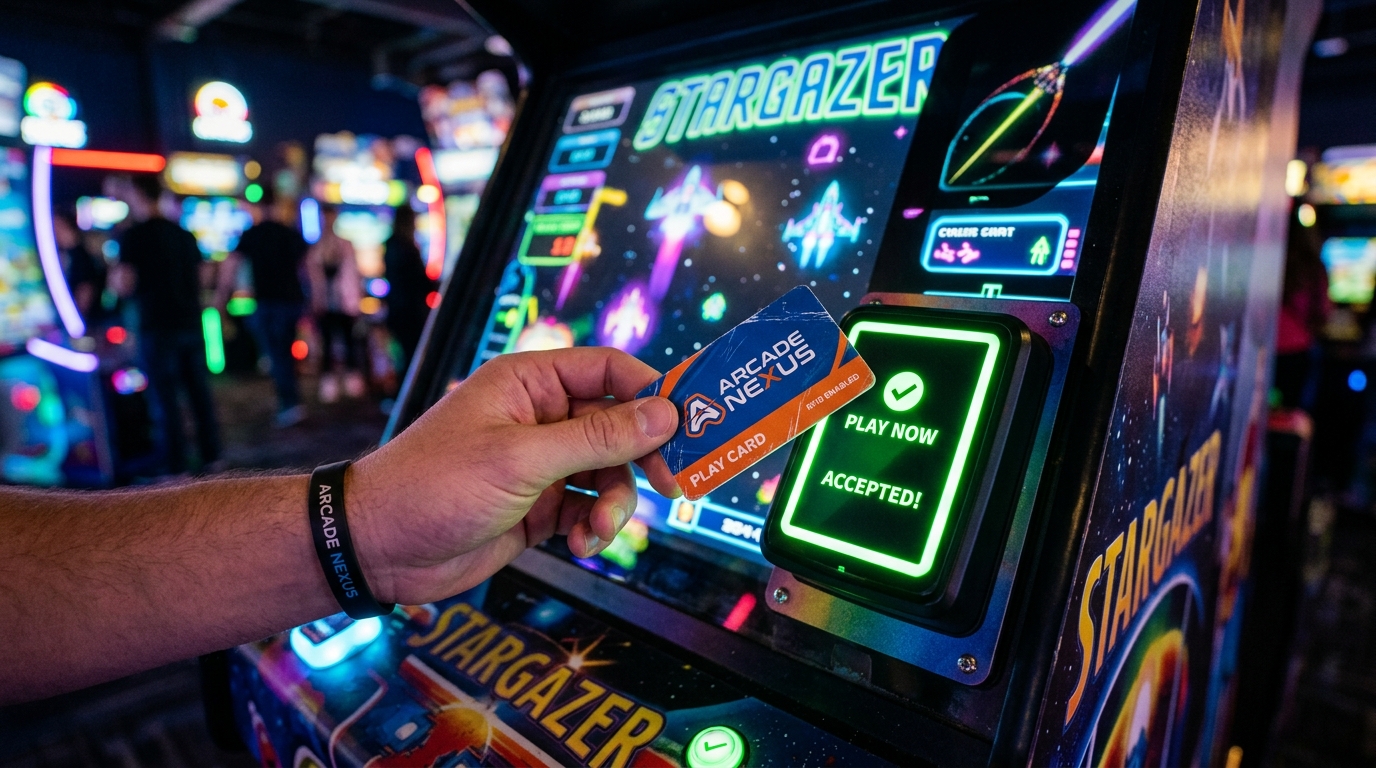
The landscape of family entertainment and amusement venues has changed dramatically over the past two decades. Walk into a modern family entertainment center (FEC), and you are less likely to hear the clinking of physical brass tokens or the whirring of paper ticket dispensers. Instead, the sensory environment is defined by the gentle beeps of tap-and-play technology. The transition from physical currency to digital cashless payments has revolutionized how entertainment venues manage their business, with the transition often centering around the adoption of a digital arcade machine card reader system.
Replacing coins with an arcade machine card reader has become more than a luxury; it is a standard expectation among modern consumers who are accustomed to digital-first experiences. Whether visiting a local boutique arcade or a sprawling national amusement park, patrons prefer the convenience of tapping a card, scanning a wristband, or using their smartphone to initiate gameplay. This convenience directly translates to improved engagement, as the friction of physical transactions is reduced, allowing visitors to focus on enjoying the games.
Beyond simple player convenience, there are deep operational advantages to integrating a digital arcade machine card reader into your fleet of games. From streamlining daily accounting processes to minimizing the wear and tear associated with moving physical parts, these digital interfaces change how an amusement park operates. In this article, we will explore the core reasons why the transition is occurring, evaluate the operational challenges of older systems, present practical solutions, and explain how the arcade machine card reader can assist in elevating your venue’s efficiency and customer satisfaction.
The Hidden Costs of Operating Without an Arcade Machine Card Reader
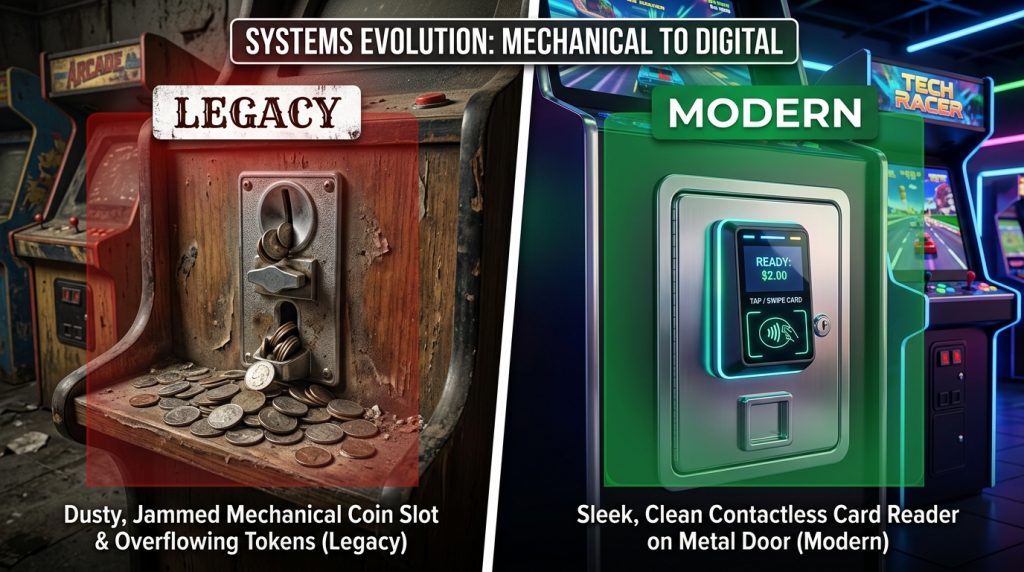
For decades, the operational foundation of any arcade was mechanical. Players would insert paper bills into a changer machine to receive plastic or metal tokens, which they would then drop into coin comparators on individual cabinets. While this physical cycle was iconic, it carried significant operational challenges that modern venue owners find increasingly difficult to justify. Operating without an arcade machine card reader presents several compounding problems.
First, physical tokens and ticket dispensers are prone to high mechanical failure rates. Coin mechanisms can easily jam due to bent coins, dirt buildup, or foreign objects inserted by players. Ticket dispensers are notorious for tearing paper, running out of rolls during peak operating hours, or suffering from dust accumulation in their optical sensors. Each jam requires staff intervention, pulling employees away from guest services and resulting in game downtime. When a machine is out of order, it does not generate revenue. Implementing an arcade machine card reader eliminates these moving mechanical parts, reducing the primary source of arcade cabinet service calls.
Second, the logistics of managing cash, tokens, and tickets are highly labor-intensive. At the end of every operating day or week, staff members must manually collect coins from each cabinet, transport heavy buckets of tokens to sorting machines, count them, and replenish token dispensers. Similarly, redeeming thousands of paper tickets for prizes requires manual scanning or counting scales, which slows down the redemption counter and leads to long queues. Furthermore, cash-based systems carry inherent security vulnerabilities, exposing operators to potential internal shrinkage or external theft during collections.
Finally, the lack of an arcade machine card reader makes tracking performance metrics challenging. Operators running mechanical setups must manually audit each coin box to determine which titles are performing well and which ones are failing to attract attention. There is no real-time visibility into game performance, nor is there a simple way to implement dynamic pricing, such as happy hour discounts or weekday promotions. Relying on physical bookkeeping as the manual alternative to an arcade machine card reader places a ceiling on an operator’s ability to optimize pricing strategies and respond to market trends.
Introducing the SynthiaX Arcade Machine Card Reader System
To address these mechanical and operational friction points, modern venues are looking toward integrated digital solutions. The SynthiaX arcade machine card reader is designed to provide operators with a reliable, feature-rich alternative to traditional coin and ticket mechanisms. Rather than managing disparate hardware components, SynthiaX consolidates payment processing, ticketing, and analytics into a cohesive, user-friendly ecosystem.
The core of the SynthiaX arcade machine card reader lies in its tap-to-play RFID technology. When a player approaches a game, they simply tap their play card or wristband against the reader. The reader instantly verifies the account balance, deducts the set price of the game, and sends an electronic pulse to the game board to start play. This process occurs in milliseconds, ensuring a seamless experience for the user. Additionally, this modern arcade machine card reader integrates e-ticket capabilities directly into the system. Instead of dispensing physical paper tickets, tickets are credited directly to the player’s account profile upon winning, keeping the transaction completely digital.
Additionally, SynthiaX provides an arcade machine card reader that links directly to a centralized, cloud-based management platform. This software allows operators to view live earnings, track player behavior, and manage inventory at the redemption counter in real time. If an operator wishes to run a special promotion—such as half-price play on a Tuesday afternoon—they can configure the pricing centrally with a few clicks. The changes are pushed instantly to every reader on the floor, without requiring manual adjustments to individual cabinet settings.
Deploying an arcade machine card reader like the ones developed by SynthiaX also enhances customer loyalty. The system supports custom loyalty tiers, digital registration, and automated email or SMS notifications. By capturing player data, operators can understand which customer segments frequent their venue and can design tailored promotions to encourage repeat visits. This approach transforms a basic transactional process into an ongoing customer relationship management tool.
A Step-by-Step Guide to Install an Arcade Machine Card Reader
Transitioning your venue to a digital platform might seem technically daunting, but the physical installation process is designed to be straightforward. Below is an overview of the typical steps required to successfully mount and wire a new arcade machine card reader to a standard arcade cabinet.
Step 1: Preparation and Safety
Before beginning any work, power off the arcade cabinet completely and unplug it from the wall outlet. Gather the necessary tools, which typically include a screwdriver set, wire strippers, electrical tape, and mounting hardware. Ensure you have the cabinet’s original manual or wiring diagram on hand, as pin configurations can vary between different manufacturers and game boards.
Step 2: Mounting the Reader
Locate a highly visible and accessible spot on the front of the cabinet, typically on or directly above the coin door. Many modern coin doors feature pre-cut slots designed for card readers, but older doors may require a custom mounting plate or bracket. Carefully mount the arcade machine card reader to the chosen position, ensuring it is securely fastened to withstand daily public use. Route the main wiring harness through the door opening into the interior of the cabinet.
Step 3: Wiring and Power Connections
For the hardware to function, it must receive steady DC power and communicate with the game’s printed circuit board (PCB). Most readers require a 12V DC power source, which can be drawn from the arcade cabinet’s primary power supply. When wiring the arcade machine card reader, locate the ground wire and the 12V positive wire on the cabinet’s power supply and connect them securely using appropriate terminal connectors or soldering methods.
Step 4: Connecting the Credit Pulse Line
Next, locate the credit line on the cabinet’s JAMMA harness or input terminal board to connect the arcade machine card reader. This is typically the wire that was previously connected to the microswitch of the mechanical coin acceptor. Connect the credit output wire from the reader to this input. When a player taps their card, the reader sends a brief pulse along this line, mimicking a coin drop and prompting the game board to register a credit.
Step 5: Network Setup and Testing
Once physical installation is complete, plug the cabinet back into the wall and power it on. The reader should boot up and display its initialization screen. Connect the device to your venue’s local network, either via a secure Wi-Fi connection or by plugging in an RJ45 Ethernet cable. Use your centralized management software to register the unit and assign it to the specific game cabinet. Finally, perform a test tap with an active test card to verify that the arcade machine card reader registers the transaction and successfully initiates a credit on the game.
Case Study: Transition to the Arcade Machine Card Reader
To understand the practical impact of modernizing an entertainment venue, consider the experience of “Neon Jungle Arcade,” a mid-sized family entertainment center located in Ohio. Historically, the venue utilized a standard double-slot coin door on its forty active game cabinets. Management faced high administrative overhead, spending roughly ten hours per week sorting tokens, handling ticket dispenser jams, and resolving disputes at the redemption counter.
Looking to improve efficiency, Neon Jungle decided to pursue a modern system by adopting the SynthiaX arcade machine card reader setup. The physical transition of all forty cabinets was completed over a single week, with minimal disruption to daily operations.
With the implementation of the arcade machine card reader, the venue saw mechanical service calls drop by nearly 65%, as coin jams and paper ticket tears were entirely eliminated. Furthermore, the administrative labor previously required for manual coin counting and ticket replenishment was redirected toward guest interactions and floor cleanliness. This practical transition demonstrated the clear benefits of the arcade machine card reader in streamlining day-to-day workflow.
Frequently Asked Questions
Can I use an arcade machine card reader on retro or classic cabinet designs?
Yes. Most digital card readers are highly versatile and can interface with older games. Retro cabinets that rely on simple pulse-style coin doors can easily be converted by connecting the reader’s output pulse wire to the cabinet’s original coin input lines. Some dedicated classic cabinets may require minor adaptation plates to match physical mounting layouts, but the underlying electronic compatibility remains highly consistent.
How does an arcade machine card reader handle power disruptions or offline situations?
Reliable reader systems are designed with onboard memory and offline capability. If the local network or internet connection experiences a temporary drop, the arcade machine card reader can temporarily store transaction records locally and sync them back to the central database once connection is restored. This prevents game play from grinding to a halt due to simple network fluctuations.
What are the primary maintenance requirements for an arcade machine card reader?
Because they do not feature the moving mechanical parts found in coin comparators or ticket dispensers, physical maintenance is minimal. Operators should periodically clean the external reader surface with a soft, non-abrasive microfiber cloth to remove dust and fingerprints. Keeping firmware updated via the central software console ensures that security patches and performance optimizations are steadily applied.
Modernize Your Entertainment Venue with a Reliable Arcade Machine Card Reader
If you are still managing the logistics of physical tokens, paper tickets, and mechanical coin doors, it may be time to evaluate the operational benefits of a modern cashless setup. Moving away from legacy systems can help you lower operational costs, improve guest flow, and gain access to clear revenue data that helps your business grow.
Integrating a high-quality arcade machine card reader is a practical step toward building a sustainable, modern amusement park or local arcade. Contact the team at SynthiaX today to learn how our arcade machine card reader hardware and software solutions can fit into your business layout, helping you achieve a more streamlined, user-friendly operation.