

How to Choose the Best Card Reader for Vending Machine Business
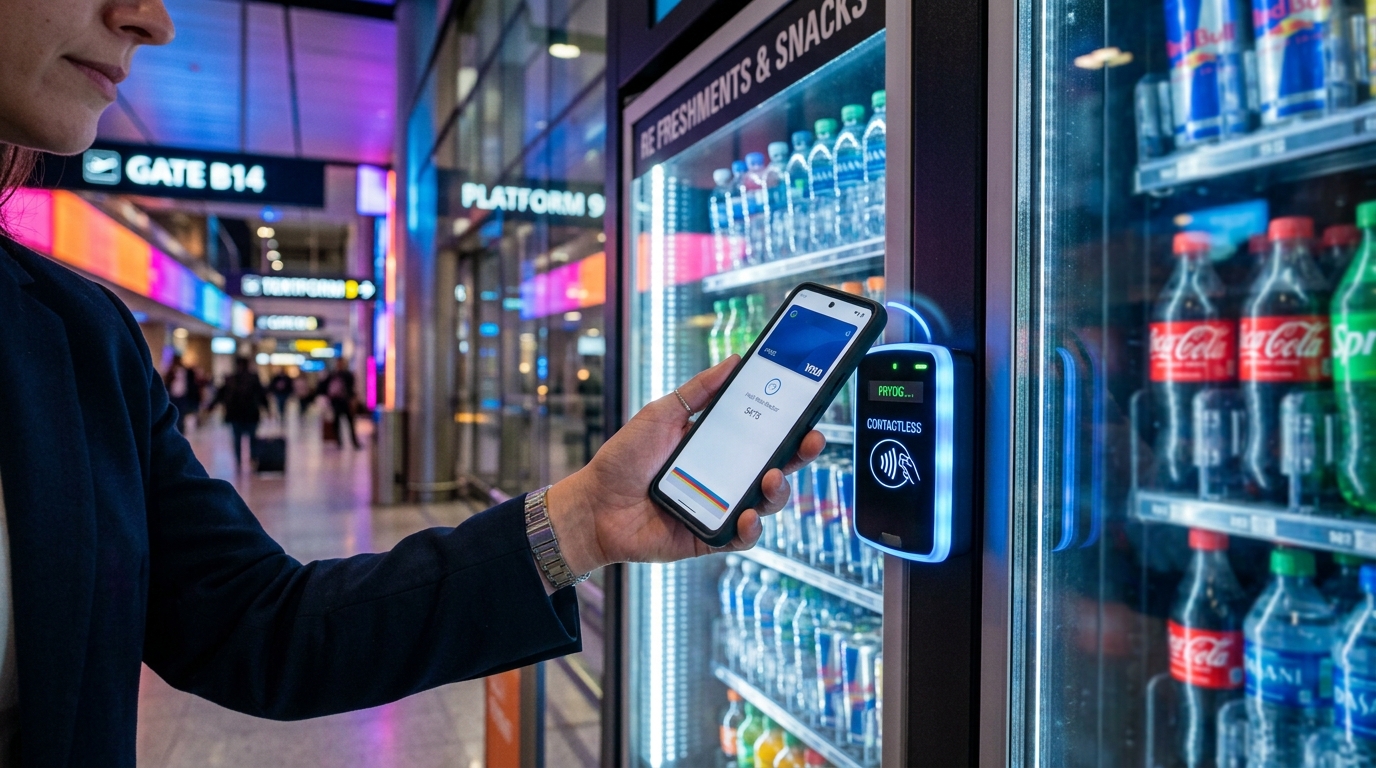
The self-service retail industry is undergoing a significant transformation. Historically, coins and paper bills were the primary transaction methods accepted by automated vending units. Today, however, consumer preferences have shifted decisively toward digital, cashless solutions. Modern shoppers demand speed, convenience, and minimal physical contact during their purchasing journeys. They expect to tap a credit card, debit card, or mobile wallet and walk away with their purchase in a matter of seconds. In today’s fast-paced retail landscape, selecting the right card reader for vending machine operations is no longer optional; it is a necessity.
For vending operators, transitioning to cashless payments is directly linked to business growth and survivability. Adding card readers allows operators to capture impulse purchases from customers who do not carry physical cash. Industry studies consistently show that machines equipped with modern payment hardware experience a substantial lift in average ticket size and overall sales volume. Without a modern card reader for vending machine systems, operators risk missing out on a significant portion of potential sales.
However, choosing the appropriate hardware for your vending fleet is not always a straightforward task. The market is saturated with different payment processors, subscription structures, and hardware models. Selecting an incompatible or unreliable payment terminal can lead to lost revenue, high processing fees, and customer frustration. Choosing a suitable card reader for vending machine setups requires a clear understanding of your business needs, technical compatibility, and the common challenges associated with unattended payment systems.
Current Problems in Cashless Vending
Operating a vending route presents distinct logistical and technical challenges, particularly when it comes to electronic payments. One of the most prominent obstacles operators face is hardware reliability and cellular signal degradation. A major challenge for many operators is dealing with a substandard card reader for vending machine that frequently loses connection. Vending machines are often placed in signal-dead zones, such as concrete parking structures, deep office breakrooms, or metal-shielded industrial hallways. When a terminal goes offline, the machine is essentially out of order for any customer who does not carry cash, directly hurting your revenue.
Transaction speed and latency also play a critical role in the customer journey. When a card reader for vending machine experiences high latency, customers often walk away frustrated. In high-footfall locations like transit hubs, hospitals, and educational institutions, transaction times must be fast. Slow processing cycles lead to queuing, which discourages other potential buyers and reduces the overall volume of daily sales.
Security is another critical concern in the modern unattended retail sector. Additionally, an outdated card reader for vending machine model may lack proper encryption, exposing customer data to risks. Card skimming and transaction-level hacking are sophisticated threats that can lead to severe financial liabilities and a complete loss of consumer trust. Ensuring your payment terminals comply with the latest security regulations is essential to protecting your business from fraud.
Finally, managing the overhead expenses of digital payments is a continuous struggle. Many operators complain about the ongoing costs associated with maintaining an inefficient card reader for vending machine network. These costs often include complex, tiered merchant fees, hidden gateway charges, and expensive software subscriptions. If your hardware lacks reliable telemetry integration, you are forced to make frequent manual trips to machines just to check inventory levels. This makes the initial selection of your card reader for vending machine technology incredibly critical.
What to Look for When Choosing a Payment Terminal
To avoid these operational pitfalls, vending business owners must systematically evaluate payment terminals based on specific criteria. When evaluating a card reader for vending machine installations, there are several key features to analyze to ensure long-term profitability.
Key Features of a Reliable Card Reader for Vending Machine
1. Technical and Hardware Compatibility
First, check the physical and software compatibility of the card reader for vending machine with your current equipment. Most modern vending systems use the standard Multi-Drop Bus (MDB) communication protocol. Your chosen card reader must plug directly into this interface without requiring costly control board replacements. For older, legacy machines, you must verify if the terminal requires a specialized converter harness or a firmware update to function correctly.
2. Network Stability and Connectivity
Second, connectivity is vital; a dependable card reader for vending machine should support multi-carrier cellular networks. Since vending environments vary, a single cellular provider may not offer consistent coverage across all your routes. Placing a terminal in a metal enclosure can act like a Faraday cage, dampening wireless signals. Look for hardware that utilizes dual-SIM or multi-network eSIM technology. This feature allows the terminal to automatically switch to the strongest available network, ensuring high uptime regardless of location without needing external signal boosters.
3. Payment Versatility
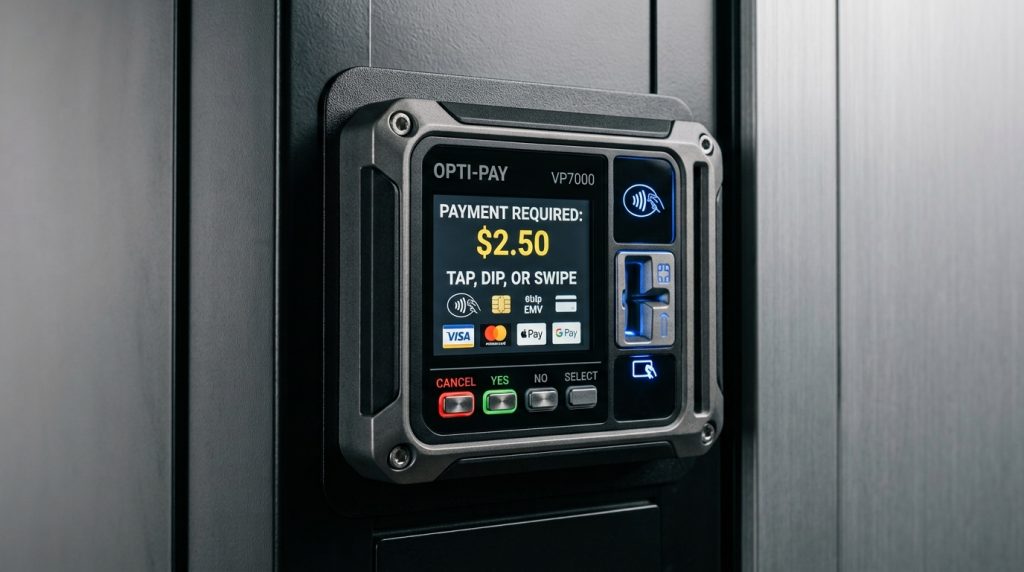
Furthermore, the ideal card reader for vending machine must accept diverse payment methods, including contact, contactless, and mobile wallets. Modern consumers rely heavily on payment methods such as Visa, Mastercard, American Express, Apple Pay, Google Pay, and contactless EMV smart cards. With transaction limits for contactless tapping increasing globally, people are comfortable making larger purchases at vending screens. If your hardware is restricted only to physical card insertions, you will likely miss out on younger, tech-savvy customers.
4. Integrated Telemetry and Route Management
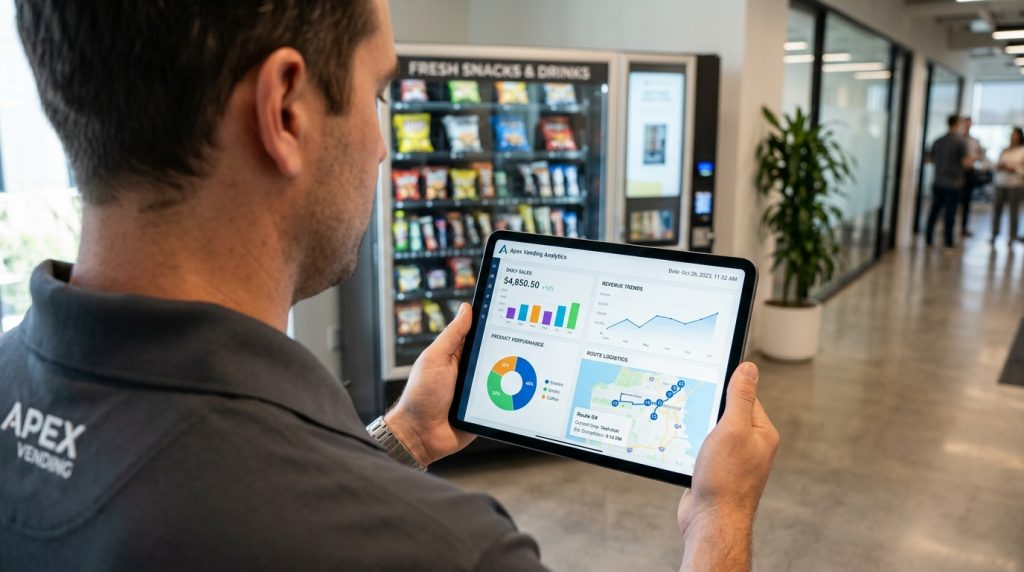
Another key feature to consider is telemetry, which allows the card reader for vending machine to transmit inventory and sales data in real-time. A high-quality payment terminal should serve as an intelligent telemetry hub. By sending DEX (Data Exchange) file data to a cloud database, it enables you to track which items are selling, monitor stock levels, and optimize restocking routes. This reduces unnecessary driving and lowers your overall fuel and labor costs.
5. Security and Compliance
Security compliance, such as PCI-DSS, is non-negotiable for any card reader for vending machine deployment. The chosen hardware must utilize secure end-to-end encryption (E2EE) and maintain current EMV certifications. This ensures that cardholder data is protected from the moment a tap or dip occurs, shielding your business from fraud liability.
Why SynthiaX is the Best Solution Compared to Others
For route operators seeking a balanced, secure, and dependable payment solution, the SynthiaX card reader for vending machine stands out as a highly practical choice. While many alternative brands provide basic payment processing, SynthiaX focuses on delivering a robust, integrated payment and telemetry ecosystem.
SynthiaX has engineered a card reader for vending machine businesses that directly addresses common connectivity struggles. Recognizing that network dropped signals are a major cause of transaction failures, SynthiaX devices are equipped with advanced multi-network eSIM technology. Instead of locking your machine to a single cellular carrier, the hardware actively monitors signal quality across major networks and transitions between them dynamically. This reduces offline periods and ensures that your machine is consistently ready to accept digital payments.
Unlike generic alternatives, the SynthiaX card reader for vending machine is designed with built-in multi-network eSIMs. This seamless integration allows you to deploy hardware across various regions without negotiating individual carrier agreements. Furthermore, the SynthiaX cloud-based software provides extensive telemetry tools. Operators can view real-time transaction history, track inventory levels, and monitor terminal performance through a single, clean dashboard. Route dispatchers can configure custom alerts for critical errors, ensuring that technical issues are resolved rapidly. This unified approach makes route management significantly more efficient.
Additionally, SynthiaX strives to offer transparent pricing with flat-rate transaction structures and no hidden gateway fees. This financial clarity allows operators to project their monthly margins with greater accuracy. This makes the SynthiaX card reader for vending machine a compelling option for those looking to upgrade their fleet with reliable, modern technology.
Case Study: Vanguard Refreshments
To understand how these elements function in a real-world scenario, consider Vanguard Refreshments, a regional vending firm managing a fleet of 150 machines across suburban and rural communities. Before adopting the SynthiaX platform, they struggled to find a reliable card reader for vending machine units in rural areas. They frequently experienced connection dropouts and processing lag, which resulted in lost impulse sales and customer complaints at their school and corporate locations.
After testing several alternatives, they decided to deploy the SynthiaX card reader for vending machine across their entire fleet. The physical installation process was straightforward, with the hardware easily connecting to their machines’ MDB ports. Vanguard’s service technicians completed the hardware migration within a single weekend, requiring minimal training thanks to the plug-and-play architecture of the system. Within days of deployment, the multi-network eSIM capabilities demonstrated their value, maintaining strong, reliable connections even in deep basement breakrooms and remote recreation sites.
By replacing their older units with this updated card reader for vending machine technology, Vanguard saw a noticeable improvement. Cashless sales rose by 22% overall, primarily due to faster processing times and improved system uptime. Additionally, by utilizing the integrated telemetry tools, Vanguard’s management team was able to optimize their service schedules, reducing manual machine visits by 30%. The transition demonstrated how a high-quality card reader for vending machine can streamline day-to-day operations and improve overall business margins.
FAQ
How hard is it to install a new card reader for vending machine?
Most modern units are designed for quick and seamless installation. If your machine is compliant with the standard Multi-Drop Bus (MDB) protocol, the hardware can typically be mounted and connected in under 30 minutes. The process involves mounting the reader to the machine’s exterior, routing the cable to the MDB port inside, and activating the terminal via the provider’s cloud dashboard.
Does a card reader for vending machine require a continuous internet connection?
Yes, to process payments in real-time, the device requires a stable cellular or Wi-Fi connection. Devices equipped with multi-network roaming eSIMs are recommended because they minimize the risk of signal drops by automatically switching to the strongest network in the area.
What fees are associated with operating a card reader for vending machine?
Vending card reader pricing generally involves a one-time hardware purchase, a small monthly fee for cellular connectivity and software access, and a percentage-based transaction fee on credit and debit card sales. Selecting a provider with transparent, flat-rate pricing structures helps you avoid unexpected operational charges.
Upgrade Your Vending Fleet Today
Finding the appropriate card reader for vending machine does not have to be an overwhelming process. By focusing on connection stability, payment versatility, and integrated telemetry software, you can secure your business margins and elevate your customer experience. Discover how the SynthiaX card reader for vending machine can help stabilize your payments and improve operational clarity today. Contact our team to learn more about our hardware options and tailored pricing plans.