

How do Vending Machine Card Readers Work
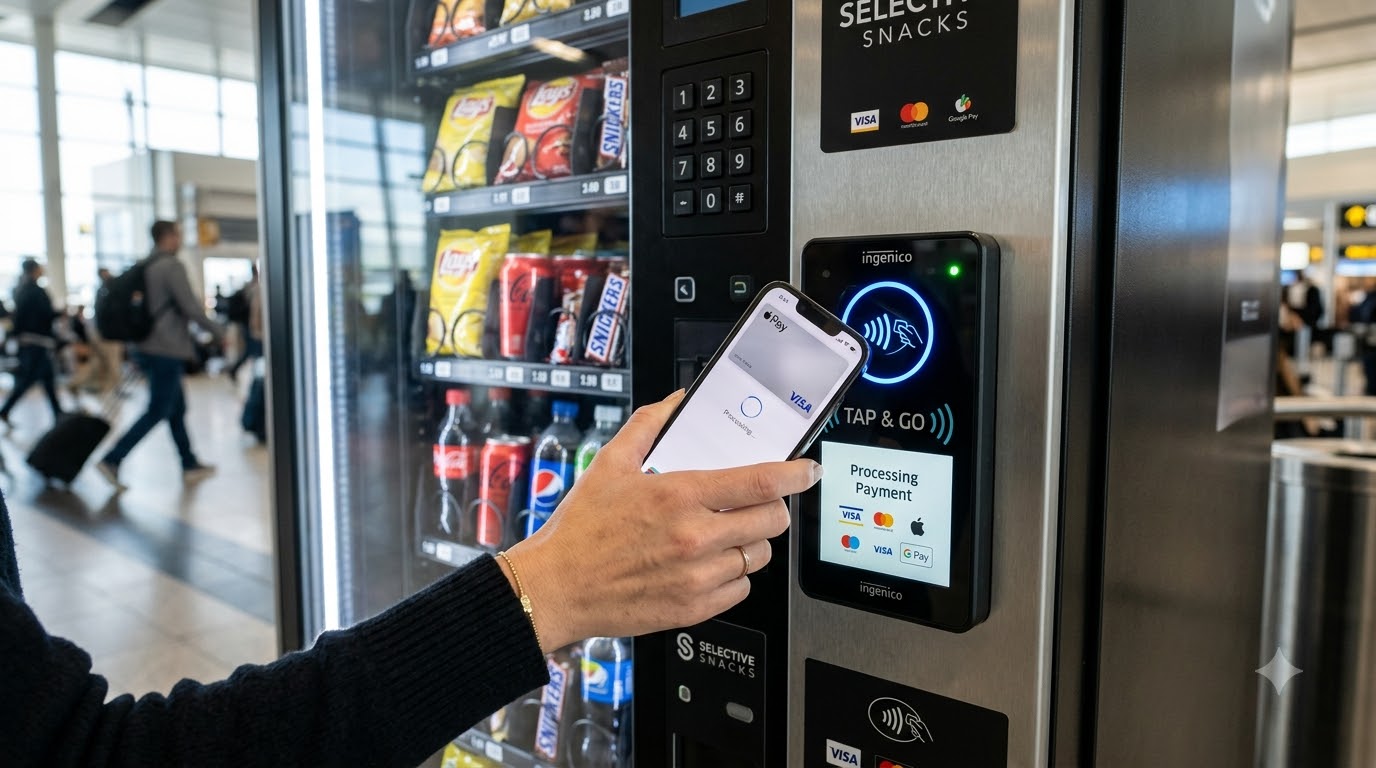
Have you ever stood in front of a snack machine with a sudden craving, reached into your pocket, and realized you did not have a single coin or bill on you? You are not alone. In our modern, cashless society, physical currency is rapidly becoming a relic of the past. Consumers expect speed, convenience, and digital payment choices everywhere they go, including at automated retail kiosks. This shift makes installing a reliable card reader for vending machine units one of the most critical upgrades any vending operator can make.
Adding a modern cashless payment terminal does more than just serve hungry customers who lack physical cash. It fundamentally transforms how a vending business operates, boosting sales, streamlining inventory management, and providing real-time data insights. But how exactly does a card reader for vending machine hardware work behind the scenes? How does a small device mounted on a machine communicate with banks, authorize payments in seconds, and tell the machine motor to drop a snack?
In this comprehensive guide, we will unpack the technology behind the modern card reader for vending machine setups, explain why your business needs one, compare cash-only vs. cashless machines, and explore a real-world case study showcasing the dramatic power of smart vending technology.
Why Do You Need a Card Reader for Vending Machine?
If you run a vending business today, relying purely on coin mechanisms and bill acceptors severely limits your revenue potential. Consumers carry less cash than ever before. When a customer approaches your machine without exact change, a cash-only setup guarantees a lost sale. Installing a card reader for vending machine fleet operations removes this friction entirely and unlocks several business-critical advantages.
1. Higher Sales Volume and Increased Ticket Sizes
When consumers pay with physical cash, they are naturally constrained by the paper bills and coins in their wallet. They typically buy a single item. However, when customers use a credit card, debit card, or mobile wallet through a card reader for vending machine interface, those mental constraints vanish. Studies consistently show that cashless payment options increase overall machine sales by 25% to 40%. Furthermore, consumers tend to make multi-item purchases because they are not limited by exact physical change.
2. Reduced Theft, Vandalism, and Cash Handling Costs
Collecting, counting, transporting, and depositing cash requires substantial labor and time. Cash boxes inside vending machines also attract vandals and thieves. Equipping your routes with a card reader for vending machine deployment drastically reduces the physical cash sitting inside your equipment. Less physical cash means fewer break-in attempts, fewer coin jams, and significantly reduced labor expenses associated with route accounting.
3. Remote Telemetry and Smart Inventory Tracking
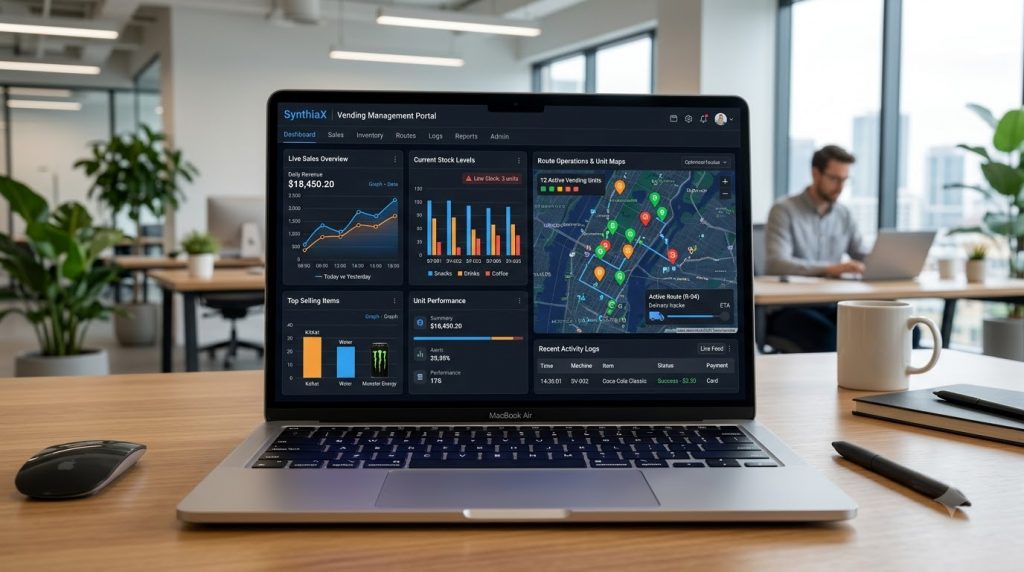
A modern card reader for vending machine application is not just a payment terminal; it is an intelligent communication hub. Most card devices include integrated telemetry hardware that connects your machine to the cloud. You can monitor inventory levels, track sales trends, detect mechanical faults, and optimize restocking routes remotely without visiting the location physically. Advanced platforms like SynthiaX leverage this integrated hardware to deliver real-time operational metrics, ensuring you always know which products are selling best and when a machine requires servicing.
4. Broad Consumer Compatibility
Today’s consumers utilize diverse payment channels. A modern card reader for vending machine accepts magnetic stripe swipes, EMV chip inserts, and Near Field Communication (NFC) contactless taps from credit cards, debit cards, Apple Pay, Google Wallet, and smartwatch applications. Providing these options ensures you never turn away a customer.
How Does a Card Reader for Vending Machine Work?
To understand how a card reader for vending machine functions, you must look at it as a multi-step communication bridge. The card reader links the customer’s financial account, cellular networks, payment processors, and the internal controller board of the vending machine.
Although the entire transaction finishes in less than two seconds, several complex steps occur behind the scenes.
Step 1: User Interaction and Credential Capture
The process begins when a customer selects a product or approaches the machine. The customer taps their contactless card, swipes a magnetic stripe, inserts an EMV chip card, or taps their smartphone over the card reader for vending machine device.
The terminal reads the sensitive payment credentials:
- NFC (Contactless): Radio waves transfer encrypted tokenized data from a card chip or mobile phone to the terminal reader.
- EMV Chip: The reader communicates directly with the integrated microchip on the card to generate a unique, single-use cryptographic code.
- Magnetic Stripe: The magnetic reader head reads the card details stored along the magnetic strip on the back of the card.
Step 2: Data Encryption and Cellular Transmission
Security is paramount in digital payments. The second the card reader for vending machine unit captures the financial information, it instantly encrypts the data using advanced PCI-DSS compliant encryption algorithms (such as AES-128 or AES-256) directly at the hardware level.
Once encrypted, the device sends the data packet via a built-in cellular modem (utilizing 4G LTE or 5G networks). Because vending machines operate in various environments, from office breakrooms to outdoor parks, cellular connectivity ensures the card reader for vending machine functions reliably without requiring local Wi-Fi networks or physical Ethernet cables.
Step 3: Payment Gateway and Bank Authorization
The cellular signal travels to a secure payment gateway, which routes the request to the payment processing network (such as Visa, Mastercard, or American Express) and ultimately to the customer’s issuing bank.
The issuing bank verifies two critical items:
- Are the payment credentials valid and uncompromised?
- Does the account have sufficient funds or available credit line?
If both conditions pass, the bank issues an instantaneous “Approved” authorization response back through the payment gateway and cellular network directly to the card reader for vending machine.
Step 4: MDB Protocol and Product Dispensation
Once the card reader for vending machine hardware receives the approval code, it needs to tell the machine to drop the snack or drink. It accomplishes this through a standardized internal communication protocol known as MDB (Multi-Drop Bus).
The MDB protocol serves as the internal language of vending machines. It allows various payment components—such as coin mechanisms, bill validators, and card terminals, to communicate directly with the machine’s main controller board (VMC).
The step-by-step internal release process unfolds as follows:
- The card reader for vending machine sends an MDB signal to the main controller saying, “Credit approved for $2.50.”
- The customer presses the selection button (e.g., B4).
- The main controller checks the price, activates the corresponding motor coil, and drops the chosen item.
- Optical drop sensors verify that the product actually fell into the delivery bin.
- The controller sends an MDB confirmation signal back to the card terminal, finalizing the charge.
Leading-edge operational systems, such as SynthiaX, seamlessly interface with the MDB architecture to ensure that payment holds, pre-authorizations, and item drops sync flawlessly in real time.
Step 5: Cloud Settlement and Remote Management Data
After dispensing the item, the transaction record uploads instantly to a cloud portal. The vending operator can track every individual transaction, analyze daily cash flow, and manage stock levels remotely. Funds accumulate in the merchant account and transfer directly to the vending operator’s bank account via automated daily or weekly deposits.
Vending Machine With Card Reader vs. Without Card Reader
To highlight the tangible benefits of retrofitting your vending operation, let us compare a traditional cash-only machine against a unit equipped with a modern card reader for vending machine terminal.
| Feature / Metric | Cash-Only Vending Machine | Machine With Card Reader |
| Accepted Payment Methods | Coins and paper bills only | Credit cards, debit cards, Apple Pay, Google Pay, tap-to-pay |
| Average Sales Volume | Lower (limited by loose change) | 25% – 40% Higher average revenue |
| Average Transaction Size | Single-item purchases ($1.25 – $2.00) | Multi-item purchases ($3.50 – $7.00+) |
| Risk of Physical Theft & Vandalism | High (cash boxes attract break-ins) | Extremely Low (minimal physical cash inside) |
| Maintenance & Service Issues | Frequent coin jams and bill validator errors | Fewer mechanical jams, higher uptime |
| Inventory & Sales Visibility | Blind status (requires physical visit) | Real-time cloud tracking & live telemetry |
| Customer Convenience | Low (requires exact change) | High (instantaneous, frictionless payment) |
Installing a high-performance card reader for vending machine unit closes the gap between outdated mechanical operations and modern digital convenience, converting casual passersby into loyal customers.
Case Study: Transforming a Vending Fleet with SynthiaX Integration
To understand how adding a card reader for vending machine setups impacts bottom-line performance, let us examine a real-world scenario involving a regional vending operator, Metro Refreshments.
The Challenge
Metro Refreshments operated a network of 85 cash-only vending units placed across corporate offices, hospital waiting rooms, and university campuses. Over a two-year period, management noticed a steady 18% decline in total sales across their routes.
Their route drivers spent countless hours clearing coin jams, counting physical currency, and driving to locations only to find machines either half-empty or jammed. Customers regularly reported frustration because they lacked cash or physical coins, resulting in lost sales opportunities every single day.
The Solution
Metro Refreshments decided to overhaul their operational model. They retrofitted all 85 machines with an all-in-one card reader for vending machine hardware solution powered by SynthiaX.
The SynthiaX platform delivered a dual benefit:
- Ultra-Fast Payment Hardware: Installed sleek, weather-resistant card reader terminals capable of accepting EMV chips, contactless swipes, and smartphone mobile wallets.
- Integrated Telemetry Platform: Connected every unit to the cloud, allowing operators to view inventory status, track live sales, and receive instant alerts for mechanical errors.
The Results
Within 90 days of installing the card reader for vending machine system alongside the SynthiaX management suite, Metro Refreshments experienced a dramatic turn-around:
- 42% Increase in Monthly Revenue: cashless transactions quickly grew to represent 70% of total machine sales within three months.
- 35% Increase in Average Ticket Value: Customers frequently bought premium snacks and beverages together when paying digitally.
- 50% Reduction in Route Mileage: Live telemetry data from SynthiaX allowed the operator to route drivers only to machines that actually required restocking, cutting fuel costs in half.
- 100% Payback Period in 4 Months: The rapid surge in sales paid off the full hardware installation and transaction setup fees in under four months.
By adopting a smart card reader for vending machine strategy backed by SynthiaX, Metro Refreshments saved their business and established a scalable foundation for rapid expansion.
Frequently Asked Questions (FAQ)
1. What is a card reader for vending machine, and how is it installed?
A card reader for a vending machine is a specialized payment terminal mounted on the exterior of a vending machine. It reads credit cards, debit cards, and mobile wallets. Installing one involves mounting the reader to the machine door, connecting its harness to the machine’s internal controller board via the standard Multi-Drop Bus (MDB) interface, and connecting an antenna for cellular telemetry.
2. Does a card reader for vending machine require an active Wi-Fi network?
No, most card readers do not rely on local Wi-Fi. A high-quality card reader for vending machine incorporates its own built-in cellular modem (4G LTE or 5G). This ensures continuous signal coverage and real-time transaction processing, regardless of whether the machine stands inside a basement, hospital, school, or outdoor facility.
3. How fast does a card reader for vending machine authorize transactions?
Modern readers complete transactions extremely quickly. Once a customer taps, swipes, or inserts their card, the card reader for vending machine encrypts the details, communicates with the cellular bank gateway, and sends the dispense command to the machine in roughly 1 to 2 seconds.
4. What payment methods can customers use on a modern card reader for vending machine?
A comprehensive card reader for vending machine accepts virtually all modern digital payment options. This includes Visa, Mastercard, American Express, and Discover cards, as well as EMV chip cards, magnetic stripe cards, and NFC mobile payment platforms like Apple Pay, Google Wallet, and Samsung Pay.
5. Are transactions on a card reader for vending machine secure?
Yes, payment terminals utilize strict, bank-grade security standards. Every card reader for vending machine employs point-to-point hardware encryption (PCI-DSS compliance). Sensitive card numbers are never stored locally inside the vending machine hardware, protecting both consumers and operators from data theft.
Upgrade Your Vending Fleet Today
The vending industry has evolved past the era of pocket change. Today’s consumers demand speed, convenience, and seamless cashless interactions wherever they shop. Equipping your fleet with a high-performance card reader for vending machine setup is no longer an optional luxury; it is an absolute necessity for surviving and thriving in modern automated retail.
By implementing a modern card reader for vending machine system, you eliminate payment barriers, safeguard your machines against theft, double your potential ticket sizes, and gain priceless cloud monitoring capability.
If you are ready to modernize your routes, maximize your daily revenue, and simplify your operations, SynthiaX offers the ultimate solution. Featuring cutting-edge contactless card terminals, lightning-fast transaction processing, and intelligent cloud telemetry, SynthiaX gives you everything you need to run a modern, high-margin vending business.
Don’t leave easy sales sitting on the table. Upgrade your operations with a modern card reader for vending machine solution from SynthiaX today and watch your business growth accelerate!