

What Are Card Readers? The Complete Guide to Cashless Payment Technology
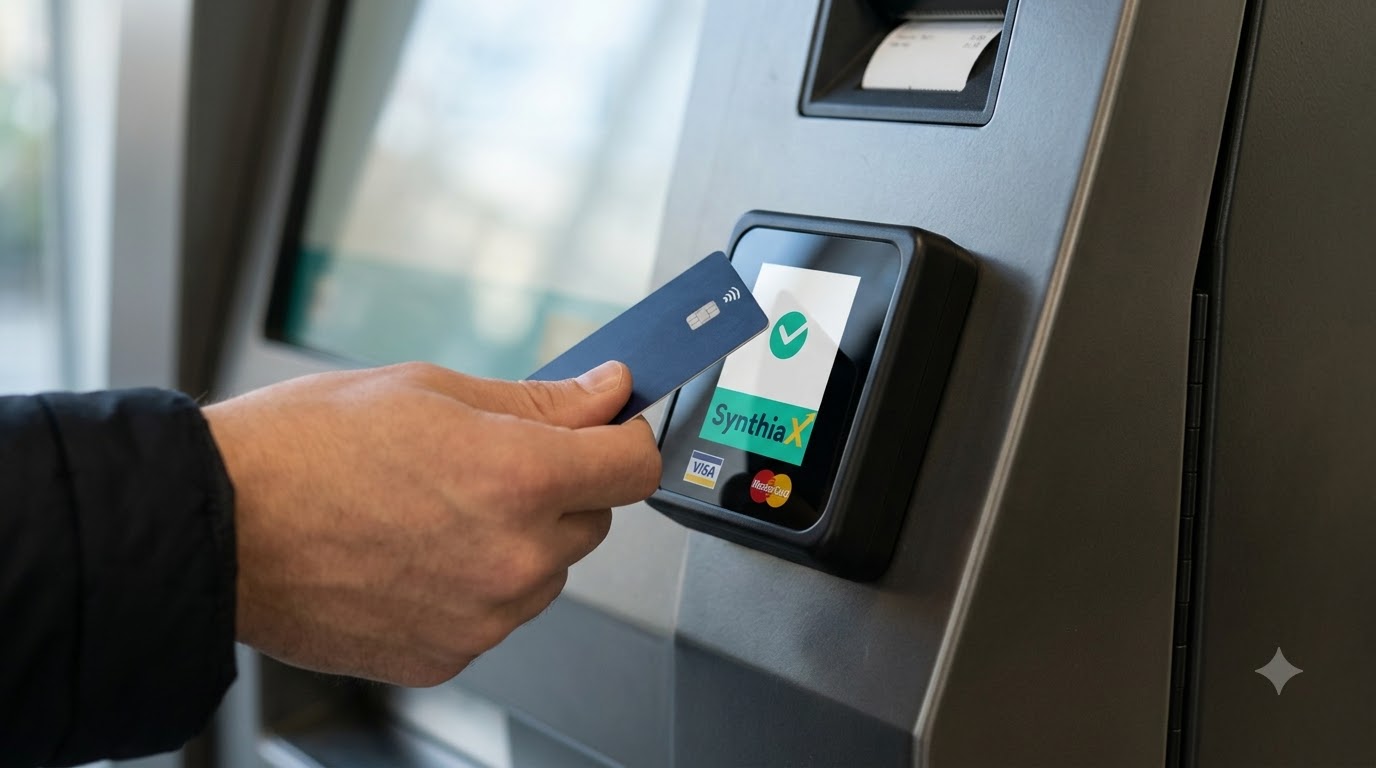
Cash is rapidly disappearing from wallets worldwide. From self-service kiosks and amusement facilities to everyday retail counters, consumers expect frictionless, digital checkout experiences. At the center of this financial revolution are card readers.
A card reader is an electronic device that captures, decrypts, and transmits payment data from debit cards, credit cards, and mobile wallets to complete financial transactions. Whether integrated into a point-of-sale counter or mounted directly onto an automated vending machine, modern card readers process sensitive customer information in seconds, verifying account balances and approving purchases through secure payment networks.
For business operators, adopting reliable card readers is no longer an optional luxury. It is a foundational requirement for revenue generation, operational efficiency, and customer satisfaction. This comprehensive guide explores how these devices operate, examines the industries that depend on them, compares them against traditional cash systems, and highlights why SynthiaX delivers the leading hardware and software ecosystem for unattended cashless commerce.
What Is a Card Reader?
To understand how payment processing has evolved, one must look at the physical and digital architecture of payment terminals. At its core, a card reader acts as a secure bridge between a buyer’s financial institution and a merchant’s bank account.
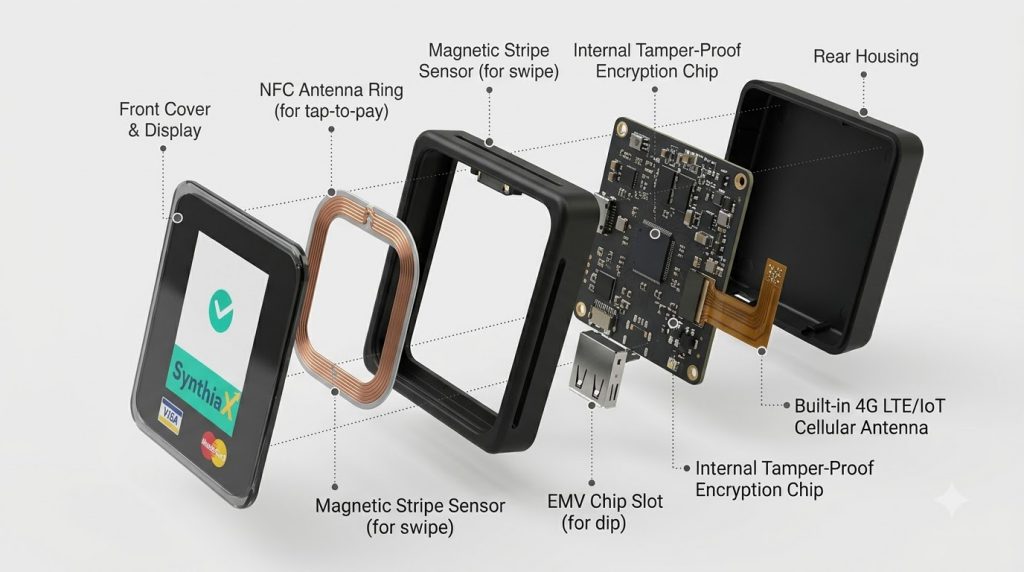
Traditional payment terminals relied exclusively on magnetic stripe swiping. Today, modern card readers feature sophisticated hardware components capable of handling multiple payment technologies simultaneously:
- Magnetic Stripe Readers (MSR): These read the magnetic band on the back of older cards using flux reversals, capturing basic account data through a physical swipe.
- EMV Chip Slots: EMV (Europay, Mastercard, and Visa) technology requires customers to insert (or “dip”) their chip cards. The reader powers the embedded microchip, generating a one-time cryptographic code that makes data cloning nearly impossible.
- Near Field Communication (NFC) Antennas: NFC facilitates contactless tap-to-pay functionality. Customers can tap contactless physical cards, smartphones running Apple Pay or Google Wallet, and smart wearables within a few centimeters of the device.
- Internal Cryptographic Processors: Specialized security chips inside the terminal immediately tokenize and encrypt card data before it leaves the physical casing.
- Connectivity Modules: Card readers communicate with processing networks via integrated 4G/LTE cellular modems, Wi-Fi antennas, Bluetooth, or hardwired Ethernet connections.
Card readers generally fall into three structural categories: standard countertop terminals used in brick-and-mortar stores, mobile card readers (mPOS) paired with tablets for roaming vendors, and ruggedized unattended card readers engineered specifically for automated kiosks, arcade cabinets, and vending machinery.
How Card Readers Work: Step-by-Step Payment Processing
The transaction process feels instantaneous to the consumer, taking between one and three seconds. Behind the scenes, however, card readers initiate a complex sequence of cryptographic checks across global financial networks.
+-------------------------------------------------------------+
| 1. Card / Wallet Tap, Dip, or Swipe                         |
+-------------------------------------------------------------+
                              |
                              v
+-------------------------------------------------------------+
| 2. Local Encryption & Tokenization inside Card Readers      |
+-------------------------------------------------------------+
                              |
                              v
+-------------------------------------------------------------+
| 3. Cellular / Wi-Fi Relay to Payment Gateway & Processor    |
+-------------------------------------------------------------+
                              |
                              v
+-------------------------------------------------------------+
| 4. Card Association (Visa/Mastercard) -> Issuing Bank Check |
+-------------------------------------------------------------+
                              |
                              v
+-------------------------------------------------------------+
| 5. Authorization Returned: Machine Dispenses / Vends Item   |
+-------------------------------------------------------------+
Step 1: Data Capture
The interaction begins when the customer swipes, inserts, or taps their payment method. The device reads the cardholder data, including the Primary Account Number (PAN), cardholder name, expiration date, and service codes.
Step 2: Instant Encryption and Tokenization
As soon as the reader detects the data, its onboard hardware security module (HSM) encrypts the payload using Point-to-Point Encryption (P2PE). The card reader converts the raw account numbers into an indecipherable token. This ensures that even if bad actors intercept the transmission, the data remains unusable.
Step 3: Transmission to the Payment Gateway
The device transmits the encrypted token over a secure Internet connection (cellular IoT, Ethernet, or Wi-Fi) to the payment processor. The processor routes the transaction details into the appropriate card association network, such as Visa, Mastercard, American Express, or Discover.
Step 4: Issuing Bank Verification
The card network sends the authorization request to the cardholder’s issuing bank. The issuing bank performs automated risk evaluations, checks for fraud indicators, verifies the billing parameters, and confirms that the account holds sufficient credit or funds.
Step 5: Authorization and Machine Triggering
The issuing bank sends an approval or decline code back through the network to the card reader. Upon receiving an approval signal, the card reader illuminates an indicator light, displays a confirmation screen, and signals the host machine controller (via protocols like MDB or pulse relays) to dispense the product, start the cycle, or credit the game. The merchant receives their settled funds during standard batch processing.
Why Your Business Needs Card Readers
Relying solely on cash or outdated payment mechanisms leaves money on the table. Modern consumers carry payment cards and smart devices almost exclusively. Installing versatile card readers offers several immediate advantages for business growth:
1. Increased Gross Sales and Basket Sizes
Cash purchases are strictly constrained by the physical paper and coins in a customer’s pocket. Card payments remove this artificial barrier. Studies consistently reveal that customers spend between 20% and 40% more per transaction when paying with digital methods. Consumers readily purchase premium menu selections, play additional arcade stages, or select multi-vend snack bundles when paying with cards.
2. Elimination of Cash Handling Costs
Managing cash is expensive and labor-intensive. Employees must count registers, balance drawers, sort coin mechanisms, and transport physical deposits to the bank. These steps introduce human error and require substantial working hours. Card readers automate accounting, depositing daily revenue directly into your merchant account with detailed electronic records.
3. Protection Against Physical Theft and Vandalism
Unattended machines that store large volumes of bills and coins are prime targets for vandalism, break-ins, and internal shrinkage. Cashless terminals store no physical currency. By reducing or eliminating the cash stored inside on-location machinery, business owners dramatically lower their exposure to theft and property damage.
4. Faster Transaction Throughput
Counting coins, feeding crumpled dollar bills into finicky bill acceptors, and waiting for change slows down lines. Tap-and-go contactless transactions execute in less than two seconds. Accelerating checkout speed allows businesses to serve higher volumes of customers during peak foot-traffic hours.
5. Access to Cloud Telemetry and Real-Time Analytics
Contemporary card readers do far more than collect payments. They operate as smart Internet of Things (IoT) nodes. Advanced readers relay machine inventory, track revenue velocity, send hardware diagnostic alerts, and allow managers to adjust product pricing remotely across an entire fleet of machines.
Which Industries Rely on Modern Card Readers?
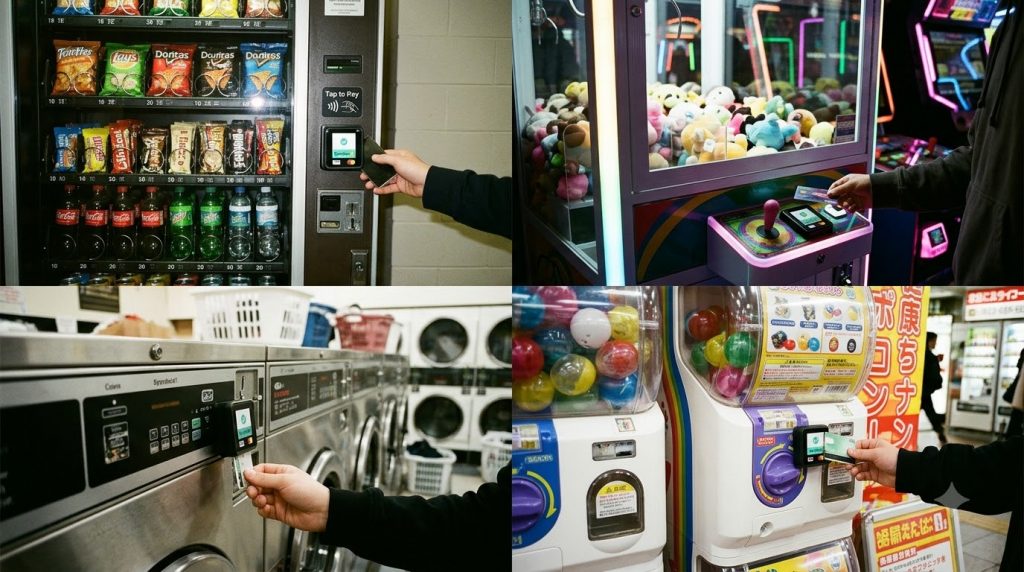
The self-service and automated entertainment sectors have experienced the most radical transformations through cashless technology. Automated hardware environments depend heavily on rugged, weather-resistant, and responsive card readers to drive daily operations.
+------------------------------------------------------------------+
|          Key Industries Powered by Modern Card Readers           |
+------------------------------------------------------------------+
|  * Vending Machines        * Laundromats        * Kiddie Rides   |
|  * Arcades                 * Coffee Vending     * Gacha Kiosks   |
|  * Amusement Parks                                               |
+------------------------------------------------------------------+
Vending Machines
Traditional vending machines were long restricted by mechanical coin validators and bill acceptors that frequently jammed. Equipping vending machines with compact card readers allows patrons to buy multiple snacks or beverages in a single transaction. Modern telemetry even enables dynamic combo promotions and remote inventory monitoring, preventing machines from sitting empty.
Arcades
Modern family entertainment centers have largely phased out physical tokens and paper tickets. Instead, arcade operators install card readers directly onto individual arcade cabinets, pinball tables, and claw machines. Guests tap reloadable play cards, credit cards, or mobile wallets to launch games, which eliminates token hopper jams and streamlines customer spend.
Amusement Parks
From outdoor carnival attractions to midway redemption games and concession booths, amusement parks require rapid throughput. Outdoor-rated card readers handle high customer volumes in variable weather conditions. Cashless systems allow park visitors to leave their physical wallets secured in lockers while using smartbands or smartphones to pay across the park grounds.
Laundromats
Laundromat operations traditionally demanded constant coin management. Customers had to track down change machines, while operators spent hours emptying heavy coin boxes and unjamming coin slides. Modern card readers bring laundromats into the modern era. Customers tap to start commercial washers and dryers, while operators enjoy automated reporting and remote machine cycle control.
Kiddie Rides
Stand-alone mechanical rides in shopping malls, grocery store vestibules, and family venues thrive on impulse purchases. Parents rarely carry loose quarters to power a two-minute mechanical ride for their toddlers. By outfitting kiddie rides with tap-to-pay card readers, operators capture spontaneous purchases from parents using contactless smart devices.
Coffee Vending
High-end automated espresso kiosks and specialty hot beverage machines require fast, frictionless checkout. Morning commuters grabbing a quick coffee will not tolerate sluggish interfaces. Modern card readers authorize transactions instantly, signaling the brewer to grind beans and dispense beverages without interrupting busy commuter schedules.
Gacha and Capsule Toy Vending
Japanese gashapon and capsule toy machines traditionally relied on mechanical coin-turning mechanisms set to exact coin denominations. As collectable capsule toys have gained mainstream popularity globally, price points have risen beyond pocket change. Installing digital card readers onto capsule towers allows operators to price premium collectible figurines flexibly without requiring customers to carry a handful of coins. SynthiaX GachaBridge™ is the only current retrofit option to convert Gacha, sweet and capsule vending machines cashless without loosing on the spin mechanism and durability of the machines.
Comparing Cash vs. Card Reader Operations
Evaluating the actual operational impact of switching from cash-only systems to integrated card readers demonstrates a stark contrast in performance, security, and profitability:
| Operational Parameter | Traditional Cash Systems | Modern Card Readers |
| Transaction Speed | Slow; manual cash insertion, coin counting, and change dispensing. | Extremely fast; sub-two-second contactless taps. |
| Average Ticket Size | Low; restricted to the physical currency on hand. | High; enables impulse buys, upselling, and multi-vend carts. |
| Vulnerability to Theft | High; physical coin boxes invite burglary, vandalism, and skimming. | Negligible; terminals hold no physical currency; data is encrypted. |
| Operational Labor | High; manual collections, trips to bank branches, and reconciliation. | Automated; direct bank deposits with automated accounting. |
| Hardware Reliability | Prone to mechanical paper jams, bent coins, and validator failures. | Solid-state electronics with no moving mechanical components. |
| Customer Experience | Frustrating when change machines run dry or bills are rejected. | Smooth and familiar; supports cards, smartwatches, and phones. |
The comparative data proves that relying solely on cash restricts business growth. Card readers replace mechanical bottlenecks with automated, high-margin transaction flows.
Why SynthiaX Is the Premier Cashless Solution
While many generic payment terminals exist, unattended environments demand hardware engineered specifically for rigorous self-service conditions. This is where SynthiaX stands apart as the premier cashless solution for modern operators.
+----------------------------------------------------+
       |                  SynthiaX PLATFORM                 |
       +----------------------------------------------------+
              |                         |
              v                         v
   +--------------------+     +--------------------+
   |  SynthiaX Hardware |     |  SynthiaX Cloud    |
   |  - MDB / Pulse     |     |  - Live Analytics  |
   |  - Rugged IP65     |     |  - Remote Pricing  |
   |  - 4G LTE IoT      |     |  - Inventory Sync  |
   +--------------------+     +--------------------+
SynthiaX develops high-grade, plug-and-play cashless hardware coupled with an intelligent IoT cloud infrastructure. Unlike consumer-grade retail card readers that fail when exposed to temperature extremes or vibration, SynthiaX devices are built to withstand demanding operational conditions. They integrate seamlessly into vending machines, arcade games, amusement rides, and laundromat controllers through native MDB, pulse, and serial protocols.
Beyond rugged hardware, SynthiaX provides business owners with a centralized management dashboard. Through this interface, operators gain real-time visibility into machine health, gross sales, and product-level inventory status. With SynthiaX, you can adjust product prices remotely across hundreds of machines simultaneously, eliminating the need to visit locations individually.
By choosing SynthiaX, operators partner with a platform designed to maximize uptime, eradicate coin jams, and future-proof operations with support for Apple Pay, Google Pay, EMV chip cards, and traditional magnetic stripes. SynthiaX delivers the reliability, speed, and analytical insights your enterprise needs to dominate an increasingly cashless marketplace.
Frequently Asked Questions About Card Readers
Do unattended card readers require Wi-Fi to function properly?
No. While many units can connect to local Wi-Fi networks, industrial unattended card readers typically utilize built-in 4G/LTE cellular IoT SIM cards. This ensures stable, standalone connectivity regardless of local network outages or building firewalls.
How secure are modern card readers against data skimming?
Modern card readers utilize Point-to-Point Encryption (P2PE) and EMV cryptographic standards. When a customer dips a chip or taps an NFC device, the reader tokenizes the information immediately. Skimming devices cannot capture reusable payment data from encrypted chip or contactless transactions.
Can older machines be retrofitted with modern card readers?
Yes. Most self-service machines manufactured over the last three decades utilize standard interface protocols like Multi-Drop Bus (MDB) or simple electrical pulse relays. Modern cashless hardware connects directly into these existing harnesses, allowing operators to upgrade vintage machines quickly without buying new equipment.
Do card readers process mobile wallet payments like Apple Pay?
Yes. Any card reader equipped with an NFC module can process transactions initiated by Apple Pay, Google Wallet, Samsung Pay, and NFC-enabled smart wearables, following the same secure standards as physical contactless cards.
Upgrade Your Business with Seamless Cashless Technology
Customer payment habits have permanently shifted. Today’s consumers prioritize speed, security, and convenience above all else. Continuing to run your business on cash mechanisms alone limits your sales potential, introduces security risks, and inflates maintenance costs.
Modernizing your equipment with high-performance card readers increases revenue per machine, eliminates mechanical jams, and provides valuable operational data. Equip your machines with SynthiaX today to unlock reliable payment processing, comprehensive cloud telemetry, and a frictionless experience that keeps your customers returning.