

How to Start an Arcade Business: A Step-by-Step Guide for Beginners
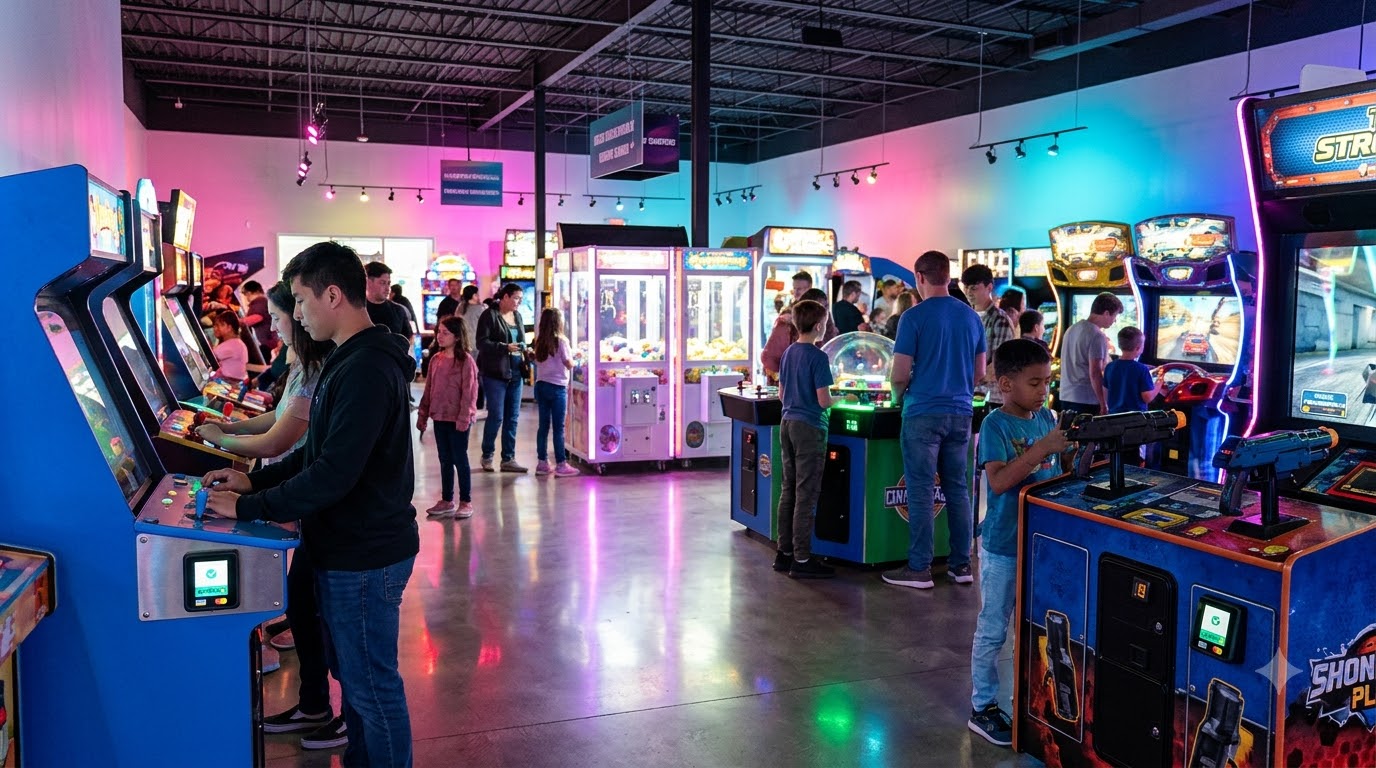
Are you looking to break into the booming out-of-home entertainment sector? Starting an arcade is one of the most exciting and financially rewarding ventures you can launch today. With modern gaming technology, experiential dining, and a resurgence of retro nostalgia, interactive entertainment venues attract crowds of all generations.
To start an arcade business, you must validate your market, secure a prime retail location with adequate three-phase electrical power, create a diverse game mix, install a dependable cashless card reader system, and implement automated management software. Sourcing reliable refurbished machines alongside high-earning redemption titles keeps startup costs manageable while accelerating your return on investment.
This comprehensive guide walks you through every phase of building a profitable arcade business, from core requirements and machine selection to modern payment architecture and common pitfalls to avoid.
What All Is Required to Start an Arcade Business
Launching an entertainment venue requires precise logistics, commercial compliance, and the right financial foundation. To launch a successful arcade business, you need several essential components.
1. Business Plan and Entity Structuring
Every viable venture begins with a rock-solid business plan. Outline your target demographic, pricing tiers, operational expenses, and projected cash flow. Determine whether you want to operate a family entertainment center (FEC), a barcade catering to adults, or a retro-focused gaming lounge. Form an official legal entity such as an LLC or corporation to shield your personal assets, register for federal and state taxes, and open dedicated business banking accounts.
2. Strategic Commercial Location and Zoning
Your venue requires high foot traffic, excellent road visibility, and ample parking. Shopping malls, suburban entertainment districts, and university neighborhoods work exceptionally well. Verify that local commercial zoning laws explicitly permit amusement centers. You must also obtain building permits, health department clearance if serving food or beverages, and local music licenses.
3. Electrical Infrastructure and HVAC Capabilities
Commercial amusement machines consume significant power and generate substantial heat. Your facility must provide robust electrical distribution, typically requiring three-phase panels with dedicated 15-amp or 20-amp circuits spaced throughout the floor. Avoid running extension cords across guest walkways. Furthermore, ensure your HVAC system can easily offset the ambient thermal load generated by dozens of monitors, motherboards, and power supplies running simultaneously.
4. Cashless Management Architecture
Modern patrons rarely carry coins or paper bills. A digital management platform and RFID card readers are non-negotiable requirements for any new arcade business. You need a centralized system that tracks game revenue, distributes credits, automates digital ticket balances, and generates real-time operational reports.
5. Insurance Coverage
Operating an interactive venue exposes your company to specific liabilities. Secure comprehensive general liability insurance, commercial property insurance, and workers’ compensation coverage to protect your enterprise against patron accidents, equipment breakdowns, and unexpected property damage.
Advantages of Refurbished Machines for Your Arcade Business
Acquiring your gaming inventory represents the single largest capital expenditure in your launch budget. While brand-new machines look immaculate, filling an entire game floor exclusively with factory-fresh units strains working capital. Incorporating refurbished units into your arcade business offers immense strategic advantages.
+---------------------------+-----------------------------------+
| New Arcade Machines       | Refurbished Arcade Machines       |
+---------------------------+-----------------------------------+
| Full retail price tag     | 40% to 70% cost reduction         |
| Slow capital recovery     | Rapid break-even timeline         |
| High early depreciation   | Minimal secondary depreciation    |
| Factory warranty only     | Proven durability in real venues  |
+---------------------------+-----------------------------------+
Substantial Capital Savings
Factory-new redemption and simulator titles often cost between $10,000 and $25,000 per unit. In contrast, thoroughly reconditioned units deliver identical gameplay at a fraction of the cost, often saving 40% to 70% per cabinet. These savings allow you to deploy a larger game library on day one without exhausting your cash reserves.
Accelerated Return on Investment
Because refurbished cabinets cost significantly less upfront, your arcade business achieves break-even velocity much faster. A refurbished claw machine or classic shooter often pays for itself within three to five months, whereas an identical new cabinet might require over a year of continuous play to offset its initial invoice.
Proven Reliability and Easy Maintenance
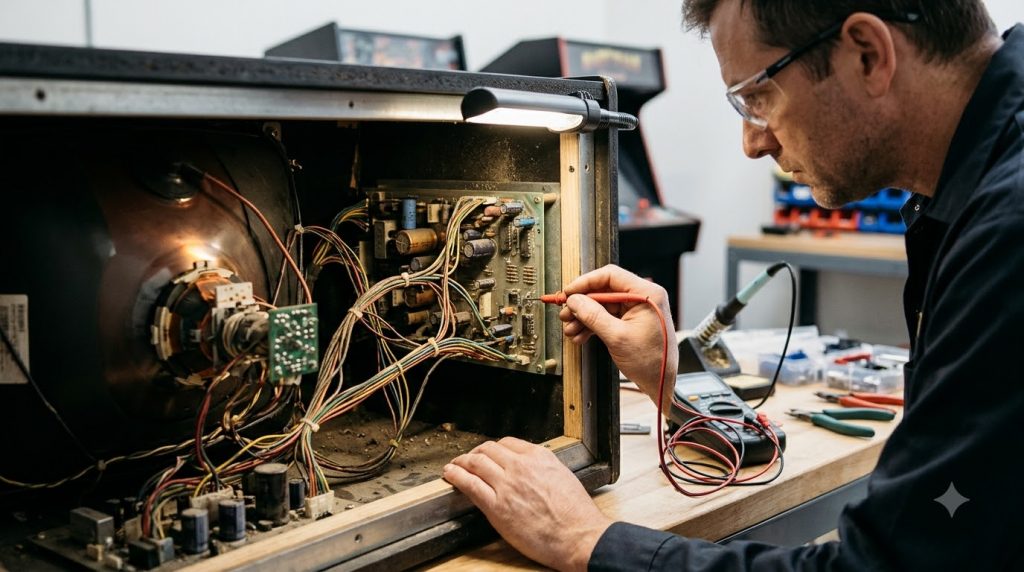
Commercial cabinets from reputable manufacturers are built like tanks. When experienced technicians restore a machine, they replace worn capacitors, install fresh power supplies, service mechanical levers, and upgrade older CRT monitors to vibrant, energy-efficient LCD displays. These upgraded legacy machines perform reliably during peak weekend volume.
Preserved Resale Value
Brand-new equipment depreciates sharply the moment you uncrate it on the game floor. Refurbished titles, however, have already absorbed their primary depreciation curve. If you decide to rotate your floor inventory a year later, you can often resell reconditioned cabinets close to your purchase price.
What Type of Machines to Put in an Arcade Business
A balanced game floor caters to varied customer segments, encouraging longer visits and repeat spending. Diversify your arcade business with an engaging mix of attractions.
[ RECOMMENDED FLOOR MIX ]
  Redemption & Ticket Games : 40%
  Prize Cranes & Merchandisers : 25%
  Simulators & Video Cabinets : 20%
  Nostalgic Classics & Pinball : 15%
1. Ticket Redemption Games
Redemption machines represent the financial backbone of modern family arcades, typically generating 40% to 50% of gross game revenues. Titles like Skee-Ball, coin pushers, spin-the-wheel setups, and electronic basketball hoops reward players with digital tickets redeemable for prizes. These games trigger psychological accomplishment and drive repeat swipe cycles.
2. Claw Machines and Direct Prize Merchandisers
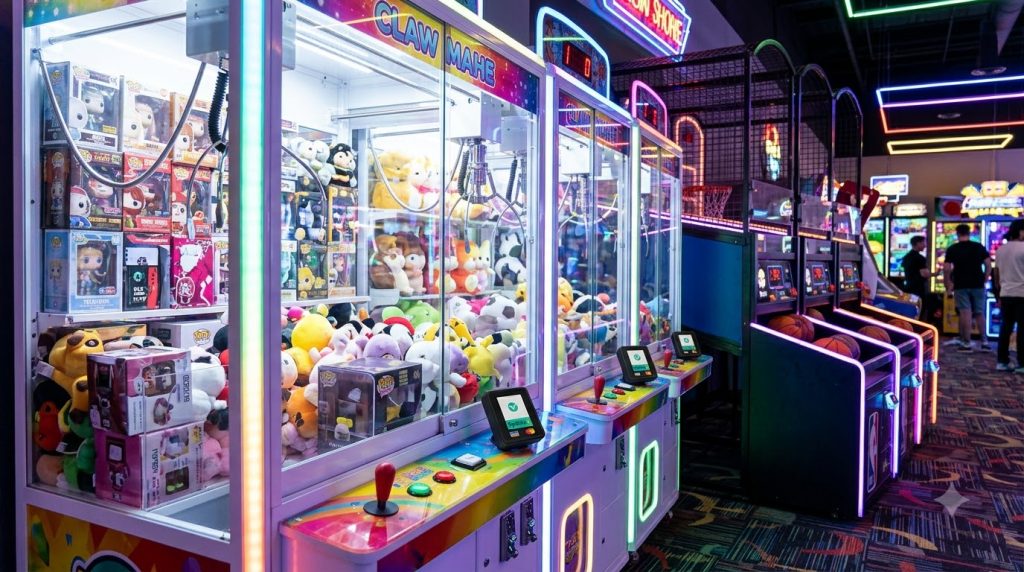
Key-master units, capsule dispensers, and claw machines deliver exceptional profit margins because players pay for the thrill of winning tangible prizes immediately. Stock these merchandisers with licensed plush toys, popular collectibles, and electronics to captivate casual passersby.
3. Video Simulators and Driving Games
Immersive dual-driver racing cockpits, motion-platform flight simulators, and collaborative arcade shooters offer experiences that home consoles cannot replicate. High-definition visuals, force-feedback steering, and surround sound turn these units into premier centerpieces for any arcade business.
4. Retro Classics and Pinball Machines
Do not overlook the magnetic appeal of legacy gaming. Cabinets such as Pac-Man, Galaga, Street Fighter II, and modern mechanical pinball tables attract older enthusiasts and parents introducing their children to foundational gaming culture. Pinball machines also foster competitive tournament communities that fill your venue during quiet weeknights.
How to Choose a Card Reader System for an Arcade Business
Traditional tokens and physical tickets are relics of the past. They jam mechanisms, create labor bottlenecks, invite theft, and frustrate guests. Transitioning to a cashless environment is essential to operating an efficient arcade business.
Selecting the right card reader infrastructure dictates your daily operational ease. Look for the following parameters when evaluating systems:
- Tap-and-Play RFID Speed: Your card readers must execute transactions in milliseconds to keep foot traffic moving smoothly during busy rushes.
- Flexible Display Screens: Choose readers featuring bright, customizable color LCD screens that show credit costs, player balances, and promotional messages directly at the cabinet.
- Wireless Mesh Connectivity: Hardware that communicates reliably over secure wireless networks eliminates the headache of running thousands of feet of Ethernet cabling underneath your floorboards.
- Dynamic Pricing Control: Ensure your software lets you adjust game pricing remotely, allowing you to run automated half-price specials on slow weekdays or premium pricing during peak Saturday nights.
- Comprehensive Analytical Dashboards: You need detailed metrics tracking revenue per machine, average player spend, and payout ratios to optimize your game floor.
When selecting an all-in-one platform to run your floor, SynthiaX delivers an industry-leading ecosystem engineered specifically for location-based entertainment venues. SynthiaX unifies ultra-responsive RFID card readers, POS terminal operations, automated prize counter inventory, and customer loyalty programs into a single intuitive cloud portal. By deploying SynthiaX, operators eliminate administrative friction, capture actionable player metrics, and maximize gross sales with zero hassle.
What to Avoid When Running an Arcade Business
Managing an entertainment center requires constant vigilance. Avoiding these common mistakes will safeguard your profit margins and protect your brand reputation.
[ CRITICAL MISTAKES TO AVOID ]
+--------------------------------+--------------------------------+
| Equipment Neglect              | Cluttered, Impractical Layout  |
| Machines with "Out of Order"   | Narrow aisles that restrict    |
| signs kill customer trust.     | wheelchairs, strollers, & flow |
+--------------------------------+--------------------------------+
| Unbalanced Payout Ratios       | Neglected Redemption Displays  |
| Stingy redemption settings     | Cheap, unappealing prizes that |
| alienate competitive players.  | demotivate your players.       |
+--------------------------------+--------------------------------+
Ignoring Preventive Maintenance
Nothing damages customer confidence faster than a row of cabinets displaying “Out of Order” signs. Arcade buttons stick, coin chutes collect debris, and display cables rattle loose. Establish daily cleaning schedules and perform weekly diagnostics on every machine. Keep critical spare parts, including microswitches, joysticks, power supplies, and harness cables, stocked in your workshop.
Poor Floor Planning and Congested Walkways
Novice operators often attempt to squeeze as many machines as possible into their square footage. Crowded aisles frustrate parents with strollers, impede wheelchair users, and create fire safety hazards. Maintain wide main walkways of at least six to eight feet, leaving adequate elbow room between adjacent competitive cabinets.
Mismanaging Payout Ratios
Setting your redemption ticket payouts or crane claw strength too stingy drives players away. If customers feel that games are rigged, they will not return. Conversely, overly generous payouts quickly erode prize counter margins. Track your ticket-in to token-out metrics weekly using your venue analytics. Advanced platforms like SynthiaX continuously monitor real-time game payouts, alerting you immediately if a specific cabinet dispenses excessive tickets or underperforms its revenue target.
Overlooking Prize Counter Quality
Your redemption counter serves as the ultimate marketing display for your ticket games. Stocking broken, dusty, or unappealing trinkets diminishes the entire player journey. Keep your prize counter immaculate, well-lit, and stocked with tiered rewards ranging from inexpensive novelty candy to high-end game consoles.
Frequently Asked Questions About Starting an Arcade Business
How much capital is required to start an arcade business?
Startup capital varies widely depending on your concept, venue footprint, and equipment procurement method. A boutique retro arcade or small barcade can launch with $80,000 to $150,000. Conversely, a mid-sized family entertainment center spanning 8,000 to 12,000 square feet typically requires $300,000 to $700,000 or more to cover leasehold buildouts, electrical work, machine acquisitions, cashless POS infrastructure, and operational reserves.
Is an arcade business genuinely profitable in the modern era?
Yes, an efficiently managed arcade business yields healthy profit margins, often generating net margins between 20% and 35%. Modern arcades do not rely on quarters; digital payment cards encourage visitors to load $20 to $50 per transaction effortlessly. Supplementing game revenue with high-margin food, craft beverages, private birthday party bookings, and corporate event rentals expands your profitability even further.
How much floor space does an arcade business need?
A standalone neighborhood arcade can operate successfully in 2,500 to 4,000 square feet, holding 30 to 50 machines comfortably. Comprehensive family entertainment centers with dining amenities, party rooms, and prize centers typically utilize 10,000 to 25,000 square feet. Plan on roughly 50 to 80 square feet per machine to account for cabinet dimensions, player standing room, and required walkway clearances.
How long does it take for an arcade business to reach break-even?
Most well-located venues achieve operational break-even within six to twelve months of opening their doors. Sourcing reconditioned or refurbished cabinets, implementing automated cashless readers, and marketing group party packages significantly reduce this timeline, helping operators recoup their upfront investment swiftly.
Launch Your Dream Arcade Today
Building an arcade business blends passion with exceptional commercial potential. By conducting thorough market research, curating an engaging mix of classic and modern ticket redemption titles, utilizing high-quality refurbished hardware, and operating a seamless cashless floor, you can establish an entertainment destination that delights your community for decades.
Take the guesswork out of your operational management. Transform your venue with the robust cashless architecture, actionable intelligence, and intuitive card reader solutions available through SynthiaX. Schedule a demonstration with the SynthiaX team today to discover how our end-to-end platform helps you launch, manage, and scale a thriving arcade business effortlessly.