

How Much Is a Card Reader for a Vending Machine? (Complete Cost Breakdown)
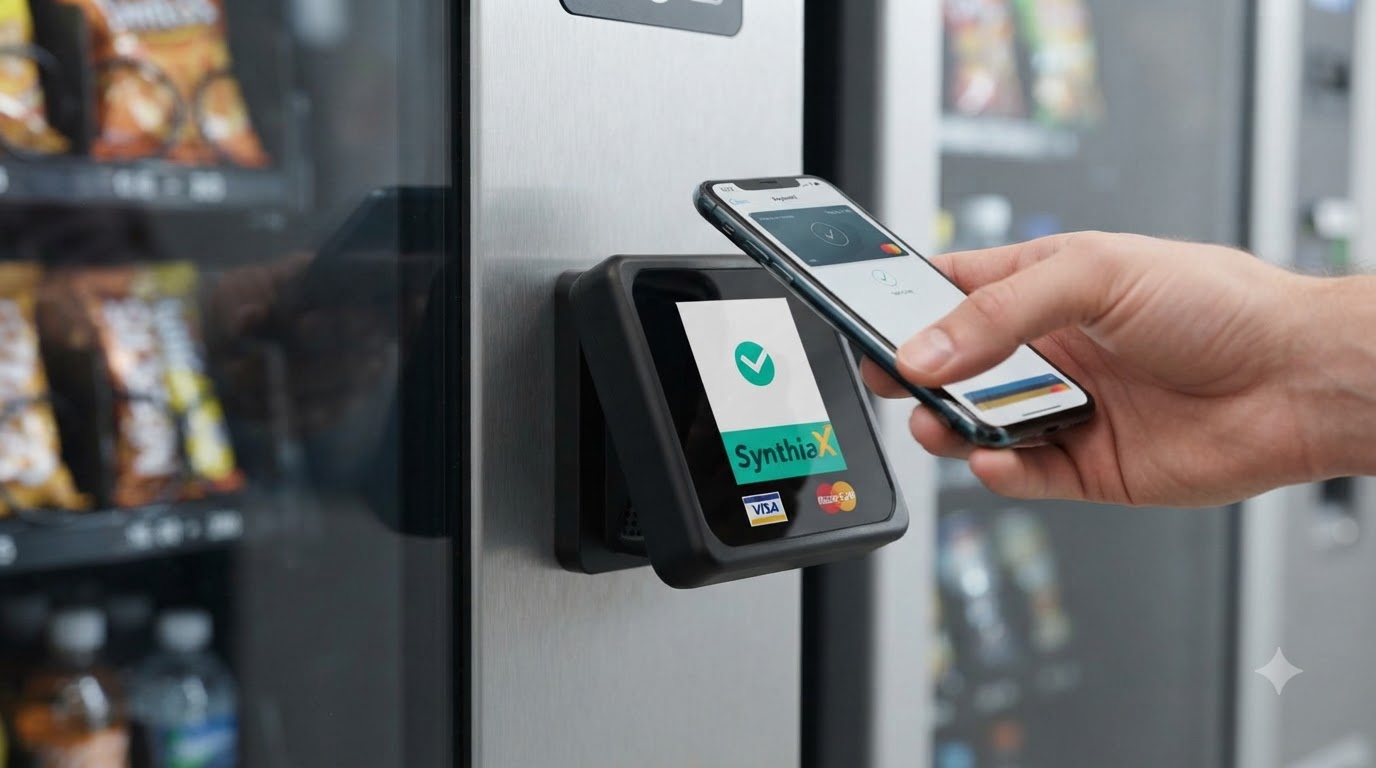
Are you planning to upgrade your vending business with cashless payment technology? If you want a direct answer upfront: a standard card reader for a vending machine costs between $150 and $450 for the hardware terminal, accompanied by a monthly connectivity fee of $5 to $12 and payment processing fees ranging from 1.2% to 6% per transaction.
In today’s retail landscape, adding a reliable card reader for a vending machine is no longer an optional upgrade. Consumers rarely carry cash, coins frequently jam mechanisms, and contactless payments unlock instant impulse purchases. In fact, operators consistently report revenue gains of 25% to 40% immediately after adding cashless terminals to their equipment.
However, looking strictly at the upfront sticker price can mislead you. To budget accurately, you need to understand the complete cost structure, from hardware and activation charges to ongoing gateway subscriptions and interchange fees. Choosing the right card reader for a vending machine protects your operational profits while giving your customers a seamless tap-and-go experience.
Below is an in-depth breakdown of every cost component, a guide to choosing the best hardware, and a side-by-side comparison of the leading market providers.
How Much Does a Card Reader for a Vending Machine Cost?
When calculating total expenses, you must view the investment through four distinct cost layers: hardware, monthly telemetry, payment processing, and ancillary fees.
1. Upfront Hardware Costs ($150 to $450)
The physical hardware price of a card reader for a vending machine varies significantly based on device capabilities, screen size, and brand positioning.
Legacy payment providers often charge between $350 and $450 for a standalone card reader for a vending machine. These units include an all-in-one housing with an interactive touchscreen, an antenna, and internal communication boards.
In contrast, modern disruptors like SynthiaX have re-engineered terminal design to bring pricing down to the $150 to $180 range. This dramatic price drop allows operators to retrofit larger fleets without draining capital reserves.
2. Monthly Telemetry and SaaS Fees ($5 to $12 per month)
Every active card reader for a vending machine requires a cellular telemetry connection to authorize transactions and transmit sales data. You do not purchase your own consumer SIM card; instead, the payment hardware provider equips the device with an internal, multi-network IoT SIM card.
This monthly fee typically covers:
- Cellular data usage across nationwide 4G LTE networks
- Remote machine management software (Merchant Back Office)
- Real-time transaction monitoring and diagnostic reporting
- Automatic software and security patches
Budget roughly $60 to $140 annually per device for these ongoing software connections.
3. Payment Processing and Transaction Fees (1.2% to 6%)
Merchant gateway and swipe fees represent an ongoing expense for every card reader for a vending machine deployed in the field. Unlike standard counter retail POS systems that charge flat interchange-plus rates, vending transactions involve small ticket sizes, usually between $1.50 and $5.00.
Payment providers handle these micro-transactions using two primary pricing models:
- Blended Flat Percentage: Some providers charge a single percentage, such as 4.5% to 5.95% per swipe.
- Percentage Plus Fixed Fee: Others levy a lower percentage with a fixed transaction surcharge, such as 2.5% + $0.05 or 1.2% + $0.05.
If your machine averages $2.00 items, a 5% fee deducts $0.10 per vend. If your terminal provider charges an excessive fixed fee, say $0.15 on a $1.50 soda, your operational margins shrink quickly. Evaluating processing tiers is crucial before making a long-term commitment.
4. Setup, Activation, and Peripheral Costs
When calculating what you will spend on a card reader for a vending machine, look out for activation fees and hardware mounting peripherals. Certain legacy vendors charge a one-time onboarding or gateway setup fee between $20 and $40 per device.
Additionally, older machines might lack factory knockouts or proper voltage rails. You may need to purchase:
- MDB (Multi-Drop Bus) conversion harnesses: $20 to $45
- External high-gain antennas for basement or concrete locations: $15 to $30
- Specialized mounting brackets or drilling drill jigs: $20 to $40
Factoring in all variables, the overall first-year investment for a card reader for a vending machine ranges from $400 to $800 per machine when including hardware, connectivity, and transaction processing.
How to Choose a Card Reader for a Vending Machine Fleet
Selecting payment hardware involves more than finding the lowest sticker price. The unit serves as your field telemetry hub, security checkpoint, and customer sales interface. Here are the core factors you must consider to make the right operational choice:
Machine Protocol Compatibility (MDB and Pulse)
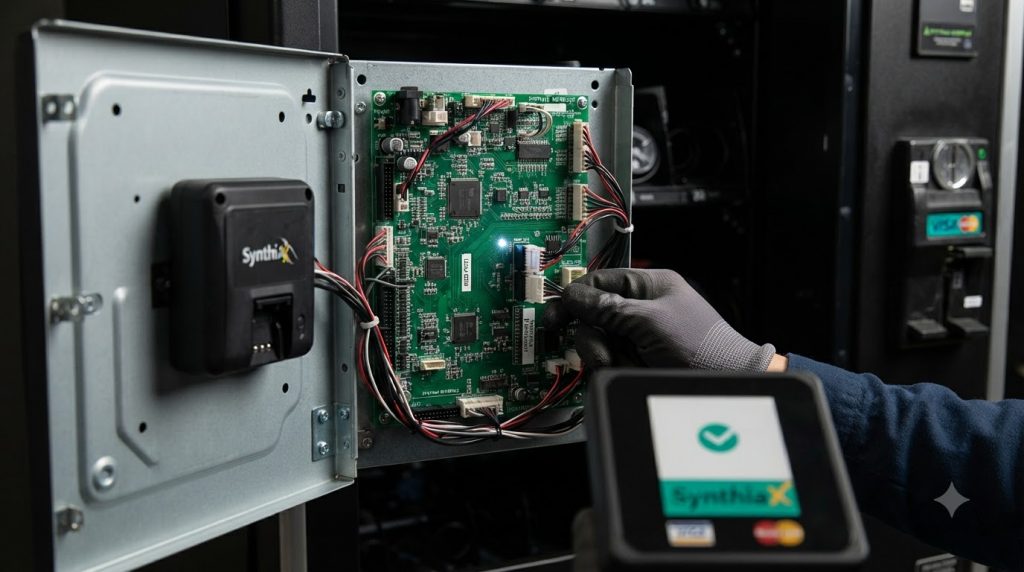
Before buying any card reader for a vending machine, verify your machine’s controller board architecture. Modern machines manufactured over the past two decades utilize the standard MDB (Multi-Drop Bus) communication protocol (MDB level 2 or 3).
If you operate older equipment, mechanical units, or amusement systems, look for terminals compatible with Pulse and USB interfaces. Modern hardware units allow universal plug-and-play installation regardless of your machine’s age.
Cellular Reliability and Signal Strength
A payment terminal is only as dependable as its network connection. If a terminal experiences downtime, you lose immediate sales and erode consumer trust.
Select a modern card reader for a vending machine that supports multi-carrier 4G LTE connectivity. Premium devices feature roaming SIM architectures that automatically switch between major cellular networks (such as AT&T, Verizon, T-Mobile, or major European networks) based on which carrier offers the highest signal strength at that specific site.
Comprehensive Telemetry and Remote Diagnostics
Today, an advanced card reader for a vending machine does far more than swipe cards. It acts as an automated telemetry bridge. The built-in modem pulls inventory data from your machine controller using DEX protocols and uploads sales numbers to your management portal.
Essential software capabilities include:
- Real-time inventory tracking to facilitate pre-kitting routes
- Instant alerts for machine temperature drops, coin jams, or motor failures
- Remote vend capabilities to release stuck items for dissatisfied customers right from your phone
- Price changes pushed remotely from a central web dashboard
Transparent Fee Structures
Always evaluate how the vendor charges for the card reader for a vending machine over a multi-year term. Watch for lengthy multi-year contracts, cancellation penalties, inactive device maintenance fees, and hidden transfer charges if you decide to sell the machine. Prioritize companies that provide clear, flat pricing without locking you into predatory long-term agreements.
Build Durability and Physical Security
Vending machines face harsh real-world conditions. Choose terminals built from impact-resistant polycarbonate materials with high IP weather ratings (IP55 or higher) for outdoor locations. Ensure the hardware supports end-to-end encryption (PCI-PTS compliance) and offers tamper-detection alerts to block physical skimming attempts.
Comparing Card Reader for a Vending Machine Solutions: Nayax vs. SynthiaX vs. Cantaloupe
The unattended payment market features legacy giants alongside agile innovators. Below, we break down how Nayax, SynthiaX, and Cantaloupe compare across hardware pricing, recurring expenses, and performance.
| Feature / Metric | Nayax (VPOS Touch) | SynthiaX (SynthiaX-1) | Cantaloupe (Engage) |
| Upfront Hardware | £300 – £350 | £120 – £140 | £300 – £360 |
| Monthly SaaS Fee | £8 – £12+/mo per device | Flat £7 no hidden charges | £8 – £10+/mo per device |
| Processing Fees | 2.5% to 5.95% per sale | Flat 1.5% + No fees for first 3 months | 5.95% per transaction + separate monthly service fee per device |
| Connectivity | 4G Multi-Carrier | 4G Multi-Carrier | 4G LTE |
| Transaction Speed | 2 to 4 seconds | <2 seconds | 2 to 5 seconds |
| Telemetry & DEX | Yes | Yes | Yes |
| Payout Frequency | Monthly or Bi-weekly | Custom settlements (Daily, weekly, monthly or as per need) | Weekly to Monthly |
| Remote Vend Tool | Basic | Advanced Mobile App | Standard |
| Onboarding fees | Ranges from £40 – £95 | No onboarding fees | 0 upfront, charges £30 transfer fees per device |
| Customer Support | Ticket-based | Fast, direct, operator-first support | Regional business hours |
| Contract Terms | Standard | Flexible / No Lock-in | Often Multi-Year |
1. Nayax (VPOS Touch & Onyx)
Nayax is a widely recognized brand producing a card reader for a vending machine on a global scale. Their flagship VPOS Touch and compact Onyx devices accept contactless credit cards, chip cards, magnetic swipes, and mobile wallets like Apple Pay and Google Pay.
- Advantages: Nayax delivers an expansive international footprint, multi-currency support, and deep telemetry integrations via the Nayax Core management suite.
- Drawbacks: Upfront hardware is expensive, frequently exceeding $400 per machine. The software interface has a steep learning curve, and transaction fees can rise higher on lower-margin merchandise.
2. Cantaloupe (ePort G10-S & Engage Series)
Cantaloupe has long supplied the traditional card reader for a vending machine across North America. Their devices dominate established domestic vending routes, school campuses, and corporate parks.
- Advantages: Cantaloupe pairs seamlessly with Seed software, an industry standard for massive enterprise fleet routing and dynamic scheduling. Their hardware is durable and familiar to customers.
- Drawbacks: The hardware remains among the most expensive on the market ($400+). Many operators express frustration over long contract terms, rigid monthly fees, and customer support bottlenecks.
3. SynthiaX (SynthiaX-1 Terminal): The Modern Solution
SynthiaX enters the market as a game-changing solution, redefining what a card reader for a vending machine should cost. Engineered specifically to tackle high upfront equipment costs and bloated recurring SaaS fees, SynthiaX provides operators with enterprise-grade capabilities at a fraction of legacy prices.
- Hardware Cost Disruption: While traditional hardware drains up to $450 per unit, the SynthiaX-1 device costs approximately $150 to $180 (£120 to £140). This allows operators to outfit multiple machines for the price of a single legacy terminal.
- Ultra-Low Processing Fees: SynthiaX slashes transaction overhead down to an industry-low 1.2% to 2.5%, significantly expanding your profit margins on everyday snack and drink sales.
- Blazing Fast Authorization: The terminal processes authorizations in just 2 to 5 seconds, reducing line friction in bustling break rooms and high-traffic transit hubs.
- Modern Pocket Command Center: With the SynthiaX back-office portal and dedicated mobile application, operators can execute “Distance Vends” remotely to resolve customer errors instantly. Operators can update product pricing dynamically, manage closed-loop loyalty cards, and audit machines without on-site visits.
For growing operators seeking maximum ROI without sacrificing technology or reliability, SynthiaX serves as the clear, future-proof solution for automated retail fleets.
Frequently Asked Questions (FAQ)
Can you install a card reader for a vending machine on an older model?
Yes. You can install a cashless reader on almost any machine manufactured after 1995 that features an MDB-compatible control board. If your machine is older and operates on an older logic board or a pulse system, you can easily install an MDB retrofit conversion kit to bridge the communication gap.
Does a card reader for a vending machine require an active Wi-Fi connection?
No. Standard payment readers do not rely on local Wi-Fi, which is notoriously unreliable or password-restricted in third-party client buildings. Instead, your card reader for a vending machine operates on an internal cellular IoT data modem that connects directly to local cell towers.
How much extra revenue does a card reader for a vending machine generate?
Industry data reveals that adding cashless acceptance boosts vending revenue by 25% to 40%. Cashless customers spend more per visit, take advantage of multi-vend purchases, and never walk away empty-handed due to empty pockets or lack of small bills.
What is the most affordable card reader for a vending machine available today?
The SynthiaX-1 terminal currently stands out as the most budget-friendly, high-performance card reader for a vending machine. By offering hardware under $180 along with discounted processing rates, SynthiaX provides the fastest path to break-even and delivers substantial long-term savings.
How do operators receive their payouts from card reader transactions?
The payment gateway batches your daily card transactions and deposits funds directly into your linked business bank account via ACH or automated bank transfer. Payout schedules vary by provider, ranging from daily settlements to weekly or bi-weekly payouts.
Maximize Your Vending ROI Today
Upgrading your machines with cashless payment technology is the single most effective way to scale sales, track real-time stock levels, and protect your route from downtime. While traditional equipment providers demand high hardware pricing and costly ongoing fees, you do not have to overpay to stay competitive.
Investing in the right card reader for a vending machine transforms your cash flow from day one. By choosing an innovative, value-driven platform like SynthiaX, you lower capital hardware costs by more than 50%, reduce transaction fees, and gain modern remote telemetry controls right from your smartphone.
Stop leaving money on the table when cash-free customers walk past your machines. Upgrade your automated retail business with a next-generation card reader for a vending machine today, and watch your bottom line grow.